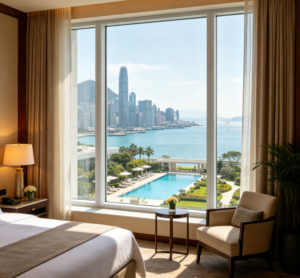
Hotel windows are more than architectural features. They influence guest comfort, energy consumption, room acoustics, building safety, and the overall appearance of a hotel. Choosing the right windows is therefore an important decision for hotel owners, developers, architects, and contractors.
Unlike residential projects, hotels must accommodate different room types, occupancy patterns, local climates, and operational requirements. A window system suitable for a boutique hotel may not meet the needs of a high-rise business hotel or a resort near the coast.
Understanding key hotel window specifications helps project teams compare options, coordinate designs, and avoid costly changes during construction. From acoustic glass and thermal performance to frame materials and safety requirements, each specification should be considered as part of the complete hotel project.
Why Window Specifications Matter in Hotel Projects
Hotel windows affect both the guest experience and the long-term performance of a building. Poorly selected windows can allow traffic noise to enter guest rooms, increase cooling or heating loads, and create maintenance problems.
Sound insulation is especially important for hotels near airports, busy roads, entertainment districts, and commercial centers. Guests expect a comfortable environment even when the surrounding area is noisy.
Thermal performance also matters. In warm climates, windows with appropriate solar control can help reduce heat entering guest rooms and public areas. In colder regions, well-insulated window systems can reduce heat loss and improve indoor comfort.
Other considerations include natural lighting, ventilation, privacy, weather resistance, security, and façade design. The best solution balances these requirements rather than focusing on appearance or initial cost alone.
Before selecting a window system, project teams should establish the building’s location, room functions, façade orientation, applicable regulations, and performance targets.
Hotel Window Glass Types and Their Applications
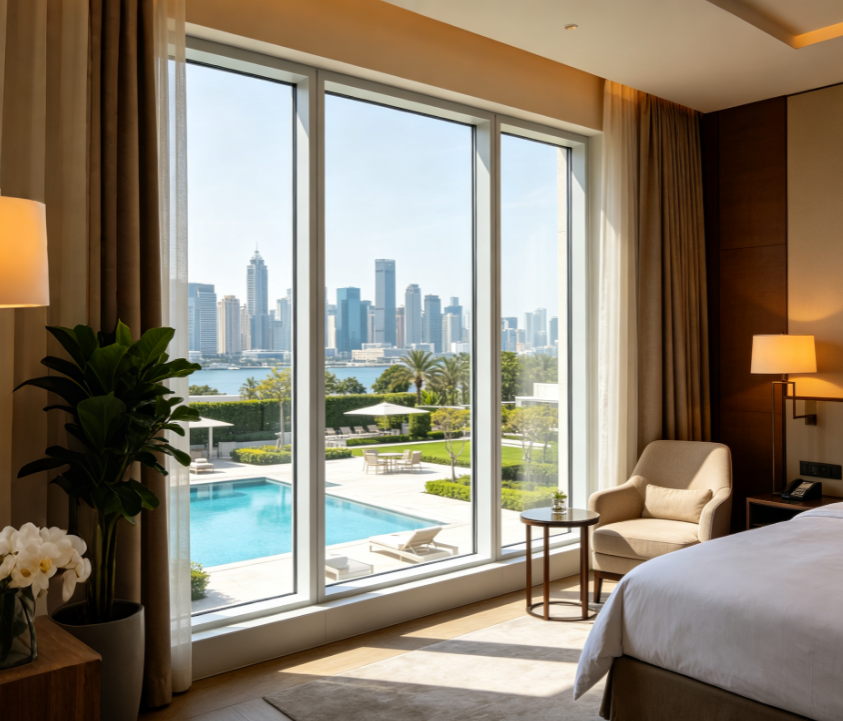
Glass selection directly affects acoustic insulation, thermal performance, safety, and the amount of natural light entering a hotel. Different glass configurations serve different purposes, so specifications should reflect the requirements of each area.
Double-Glazed Windows
Double-glazed windows use two panes of glass separated by a sealed cavity, which may contain air or an insulating gas depending on the system. This configuration can improve thermal insulation compared with conventional single glazing.
For hotels in busy urban areas, double glazing can also contribute to noise reduction. However, acoustic performance depends on more than the number of glass panes. Glass thickness, differences between pane thicknesses, cavity design, frame construction, and perimeter sealing all influence the final result.
Project teams should request test data for the complete window system rather than assuming that every double-glazed window provides the same performance.
Laminated Glass
Laminated glass consists of multiple glass layers bonded with an interlayer. If the glass breaks, the interlayer helps hold fragments together, reducing the risk of falling pieces.
It can be appropriate for selected hotel façades, doors, balcony areas, and other locations where safety glazing is required. Certain laminated glass configurations can also improve acoustic performance.
The required glass type should be determined by its location, impact risk, applicable building codes, and the window system’s tested specifications.
Tempered Glass
Tempered glass is heat-treated to increase its strength compared with ordinary annealed glass of similar thickness. When it breaks, it generally fragments into smaller pieces rather than large, sharp shards.
It may be suitable for applications requiring safety glazing, subject to local regulations and the specific installation conditions. However, tempered glass and laminated glass serve different functions. Tempered glass alone does not provide the same fragment-retention behavior as laminated glass.
Low-E Glass
Low-emissivity (Low-E) glass has a specialized coating designed to control heat transfer. Depending on the coating and glass configuration, it can reduce unwanted heat gain or heat loss while maintaining useful levels of daylight.
For hotels in hot climates, solar-control Low-E glass may help limit solar heat entering guest rooms. In colder climates, a different configuration may be more appropriate for reducing heat loss.
Glass selection should consider the local climate, façade orientation, visible light transmission, solar heat gain coefficient, and the building’s energy strategy.
Acoustic Performance for Hotel Guest Rooms
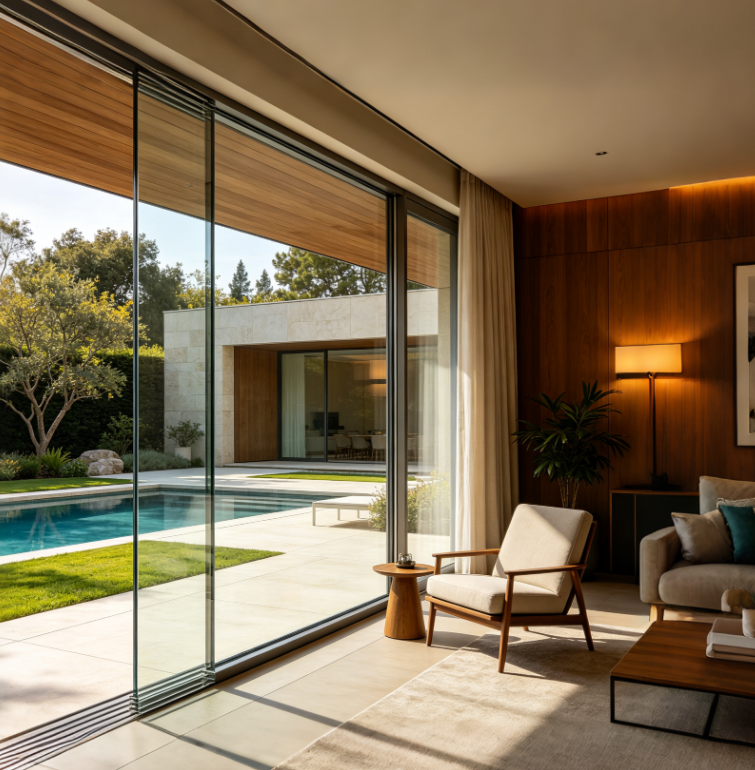
Noise control is one of the most important considerations when specifying hotel windows. External noise can come from road traffic, aircraft, nearby businesses, construction activities, and other buildings.
The appropriate acoustic specification depends on the hotel’s location and the function of each room. Guest rooms facing busy streets may need stronger sound insulation than rooms facing a quiet courtyard. Conference rooms, restaurants, and other public spaces may have different acoustic priorities.
Several factors influence window sound insulation:
- Glass configuration:Different pane thicknesses and laminated glass can improve performance in suitable configurations.
- Air cavity:The width and design of the cavity between panes affect acoustic behavior.
- Frame construction:Frames must support the specified glazing and maintain effective sealing.
- Seals and installation:Gaps around the sash or between the frame and wall can significantly reduce overall sound insulation.
- Ventilation design:Open windows and some ventilation openings allow more external noise to enter.
When comparing products, project teams may encounter acoustic ratings such as the weighted sound reduction index (Rw) or other locally recognized measurements. These figures should be interpreted according to the relevant testing standard and any required corrections for specific noise conditions.
Rather than choosing glass based on a general claim of being “soundproof,” establish a project-specific acoustic target and request supporting test reports for the complete window assembly.
Energy Efficiency and Thermal Performance
Windows can be a significant source of heat gain and heat loss in a hotel. Their thermal performance affects guest comfort, HVAC sizing, and operating costs.
Three factors deserve particular attention.
U-value measures the rate of heat transfer through a building component. A lower U-value generally indicates better thermal insulation.
Solar heat gain coefficient (SHGC) indicates how much solar radiation enters through a window. A lower SHGC can help reduce unwanted solar heat gain, which is often useful in cooling-dominated climates.
Visible light transmission (VLT) describes how much visible daylight passes through the glazing. A suitable VLT can help balance natural lighting, views, glare control, and solar performance.
These values should be evaluated together. Selecting glass with a very low SHGC may reduce cooling loads but could also affect daylight or the appearance of the façade. The right balance depends on orientation, shading, climate, and the building’s energy requirements.
In tropical and other hot climates, project teams should pay particular attention to solar exposure, effective shading, air-conditioning performance, and resistance to humidity and heavy rain. In colder climates, thermal insulation and condensation control may receive greater emphasis.
The window specification should align with the building’s energy model and local energy regulations whenever these are available.

Hotel Window Frame Materials: Aluminum and uPVC
The frame affects durability, appearance, maintenance, thermal performance, and the size of the glazed opening. Two commonly considered materials are aluminum and uPVC.
Aluminum Window Frames
Aluminum frames are widely used in commercial buildings because they offer a modern appearance, structural versatility, and compatibility with large glazed openings.
They are often considered for contemporary hotels, high-rise buildings, and façades with slim frame profiles. Finishes can be selected to coordinate with the architectural design.
However, aluminum conducts heat relatively easily. Where thermal insulation is important, thermally broken aluminum systems may be appropriate. Frame strength, corrosion resistance, coating quality, drainage, and hardware should also be assessed for the project’s conditions.
uPVC Window Frames
uPVC frames can provide useful thermal insulation and generally require limited routine maintenance. They may be suitable for selected hotel projects where their appearance, dimensions, and performance align with the design requirements.
Their suitability depends on the system’s structural capabilities, exposure conditions, opening size, and local climate. Large openings or demanding façade conditions may require a different frame system.
Matching Frames to Project Requirements
There is no single frame material that is best for every hotel. Aluminum may suit a contemporary façade with large openings, while uPVC may work well in projects prioritizing thermal performance and particular maintenance requirements.
The decision should consider the full window assembly, including glass, seals, hardware, installation details, finish durability, and expected service conditions.
Hotel Window Safety and Compliance Requirements
Hotel window safety must be evaluated during design, not left until procurement or installation. Requirements vary by country, building type, height, and window location.
Key considerations include:
- Safety glazing:Glass in doors, low-level glazing, and other hazardous locations may need to meet specific impact or breakage requirements.
- Fall protection:Windows in guest rooms and upper floors may require restrictors, guards, or other protective measures, depending on the building design and local code.
- Wind loads:High-rise hotels and buildings in exposed locations need window systems designed for the applicable wind pressures.
- Weather resistance:Façade systems should be suitable for expected rain, wind, humidity, and temperature conditions.
- Hardware and operation:Locks, hinges, restrictors, and opening mechanisms should support safe operation and appropriate security.
- Emergency and maintenance access:Window design must coordinate with applicable fire safety, rescue, cleaning, and maintenance requirements.
For hotels near coastal areas, corrosion resistance and protection of metal components deserve additional attention. For high-rise projects, structural calculations and tested system documentation are particularly important.
Project teams should confirm applicable regulations with the local architect, façade consultant, engineer, and relevant authorities. A general product description cannot replace project-specific compliance checks.
Fixed, Casement or Sliding Windows for Hotels?
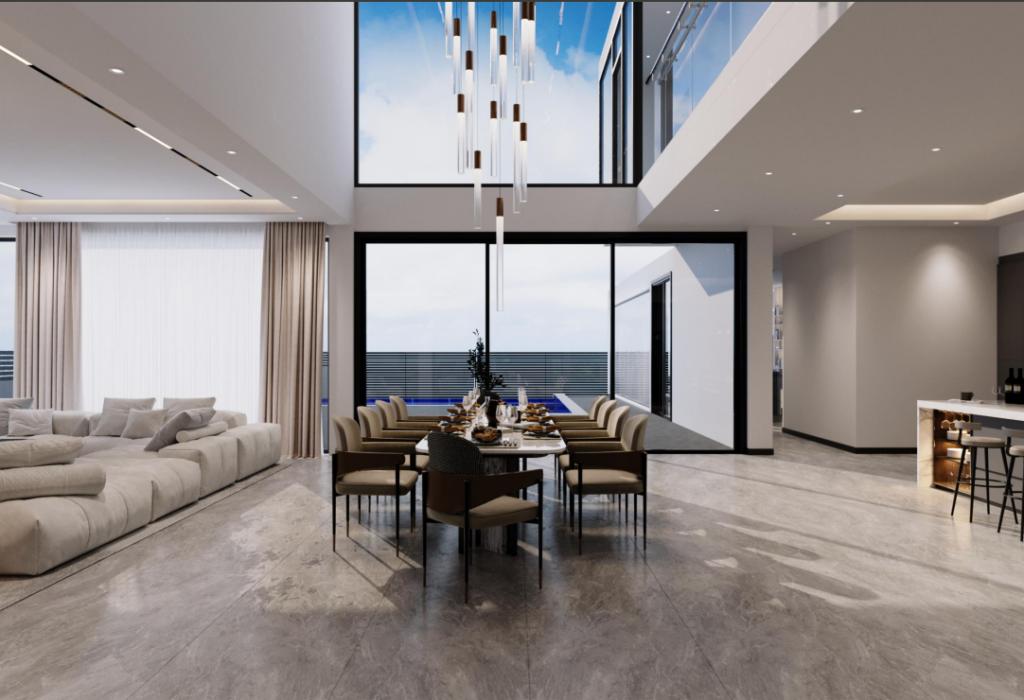
The opening style influences ventilation, cleaning access, space planning, sealing, and the appearance of the façade.
Fixed windows do not open and can be suitable for areas where views and daylight are priorities. They may also be used alongside separate operable windows. Since there are no opening sashes, the design can be simpler, but ventilation must be provided elsewhere where required.
Casement windows open on hinges and can provide effective ventilation when properly designed. Their suitability depends on the façade, wind conditions, hardware, and the amount of space available for the opening sash.
Sliding windows move horizontally or vertically, depending on the system. They can be useful where a swinging sash would interfere with furniture, circulation, or nearby surfaces. Their sealing and acoustic performance depend on the quality and design of the complete system.
The best window type may differ between guest rooms, corridors, bathrooms, restaurants, and other spaces. It is also important to coordinate window operation with curtains, furniture layouts, air-conditioning, cleaning procedures, and maintenance access.
Hotel Window Specification Checklist Before Procurement
Before confirming a window order, project teams should review the following information:
- Window dimensions, opening configuration, and location schedules.
- Glass type, thickness, configuration, and required safety properties.
- Acoustic targets and supporting test reports where sound insulation is important.
- Thermal performance, including U-value, SHGC, and visible light transmission where applicable.
- Frame material, profile, color, finish, and corrosion-resistance requirements.
- Hardware, locks, opening restrictors, and ventilation provisions.
- Wind-load design, water penetration resistance, and air leakage requirements.
- Perimeter sealing, drainage, flashing, and installation interfaces.
- Applicable local standards, drawings, samples, and product documentation.
- Packaging, transportation, delivery sequencing, installation responsibilities, and quality inspection.
These details should be coordinated with the architectural drawings, façade design, and other interior materials before production. Confirming them early helps reduce discrepancies between the specified products and the actual building conditions.
How George Group Supports Hotel Window and Interior Projects
Hotel window selection is closely connected to façade design, interior finishes, lighting, doors, and the overall guest experience. Managing these elements separately can create additional coordination work during design, procurement, and installation.
George Group provides one-stop building materials and interior solutions for residential and commercial projects. For hotel developments, our product categories include windows, doors, lighting, tiles, marble and stone, bathroom solutions, and furniture.
Our team can provide design support and help coordinate material selections across different spaces. Interior decoration can also be included when required by the project scope.
Whether you are planning a new hotel, renovating guest rooms, or coordinating materials for a larger hospitality development, defining the requirements early helps establish a more consistent design and procurement plan.
Explore our hotel windows and window solutions to review relevant options, or learn more about our one-stop solutions for complete interior projects.
Conclusion
The right hotel window specifications should balance acoustic comfort, energy efficiency, safety, durability, and architectural design. Glass configuration, frame material, opening style, and installation quality all contribute to the final result.
By setting clear performance targets, checking local regulations, and coordinating window selections with the wider building design, hotel project teams can make more informed decisions and reduce avoidable changes during construction. A project-specific approach helps ensure that the selected window systems meet both operational needs and guest expectations.