
Interior design is moving toward spaces that feel warmer, more tactile and more connected to nature. While clean lines and contemporary forms remain popular, interiors are increasingly using wood, natural stone, textured surfaces and warm neutral tones to create greater visual depth and comfort.
This shift can be seen across both residential and commercial projects. Villas and apartments are incorporating natural materials into living areas, bedrooms, kitchens and bathrooms, while hotels, offices and restaurants are using them to create distinctive environments for guests and customers.
Natural materials are therefore becoming more than a decorative trend. They are influencing how designers approach materials, furniture, lighting and the overall relationship between different elements within an interior.
But using natural materials effectively is not simply about choosing stone or wood. The materials need to work together with the space, its function and the overall design concept.
Why Are Natural Materials Becoming More Popular in Interior Design?
There is growing interest in interiors that feel comfortable, authentic and visually interesting rather than overly uniform. Natural materials can contribute to this atmosphere through their textures, patterns, colors and variations.
Creating Warmer and More Comfortable Spaces
Many contemporary interiors previously relied heavily on cool neutral colors, smooth surfaces and highly minimal forms. While this approach can create a clean appearance, too many hard and uniform surfaces can sometimes make a space feel cold.
Wood, stone, natural fabrics and textured finishes introduce warmer tones and visual variation.
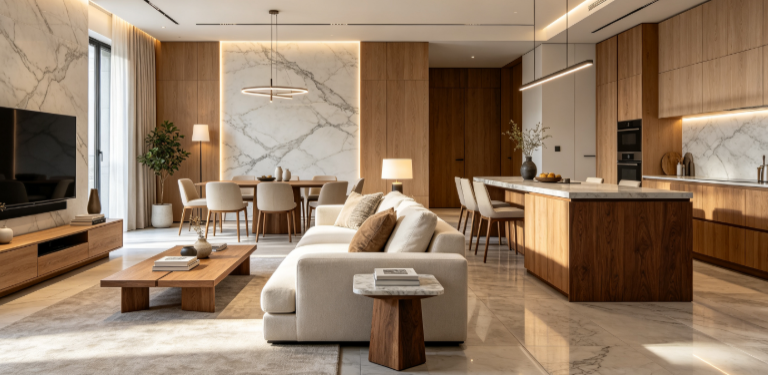
For example, a living room can combine wood flooring with modern furniture, soft upholstery and warm lighting. A bathroom can combine stone surfaces with wood-look finishes and carefully selected lighting.
The result is still contemporary but feels more comfortable and inviting.
Adding Texture and Visual Depth
Natural materials rarely have completely uniform surfaces.
The grain of wood, the pattern of marble and the texture of stone can create subtle variations across an interior. These details can make a space more visually interesting without relying on excessive decoration.
This is particularly useful in minimalist interiors, where materials themselves become part of the design.
Connecting Interiors with Nature
Natural materials can also strengthen the relationship between indoor and outdoor environments.
Large windows, natural light, wood, stone and plants can work together to create a stronger connection with the surrounding environment.
This approach can be particularly effective in villas and other properties where indoor and outdoor areas are closely connected, but the same principle can also be applied to hotels, restaurants and other commercial spaces.
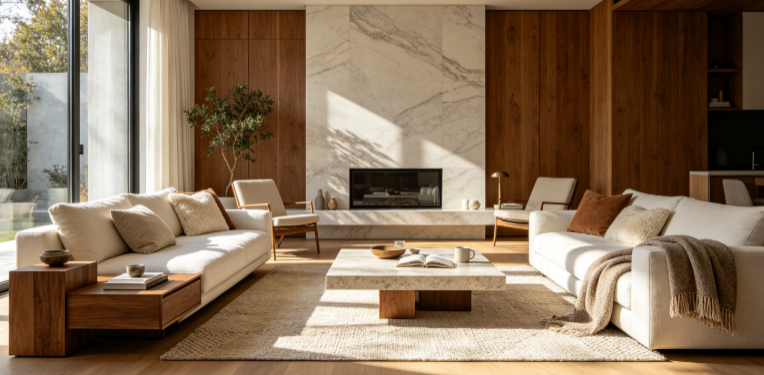
Natural Stone in Modern Interior Design
Natural stone has long been associated with high-end interiors, but its application has expanded significantly. It can now be used across a wide range of contemporary residential and commercial spaces.
Marble for Luxury and Contemporary Interiors
Marble can create a strong visual focal point because of its natural patterns and distinctive surface.
Depending on the design, marble can be used for:
- Feature walls
- Flooring
- Kitchen surfaces
- Bathroom surfaces
- Reception areas
- Dining spaces
- Hotel lobbies
A modern interior does not necessarily require marble to cover an entire room. A single marble feature can provide enough visual contrast when combined with simpler materials.
For example, a contemporary living room could use marble as a feature surface while using wood, neutral furniture and warm lighting to create balance.
Other Natural Stone Applications
Other stone materials can also be used according to the requirements of the project.
Stone can contribute texture and character to walls, floors, countertops and architectural features.
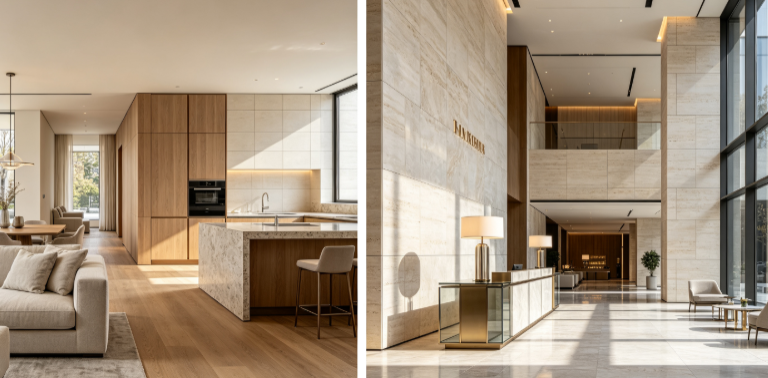
In commercial interiors, stone can be particularly useful in areas that need a strong visual identity, such as hotel reception areas, restaurant entrances and office reception spaces.
Explore Marble & Stone to see how natural stone can become part of a wider interior material palette.
Natural Stone in Residential and Commercial Projects
The role of natural stone is not limited to luxury villas.
In residential projects, it can be incorporated into selected areas such as kitchens, bathrooms or living rooms. In commercial projects, it can be used to create durable and visually distinctive public areas.
The key is to select the right application rather than assuming that more stone automatically creates a better interior.
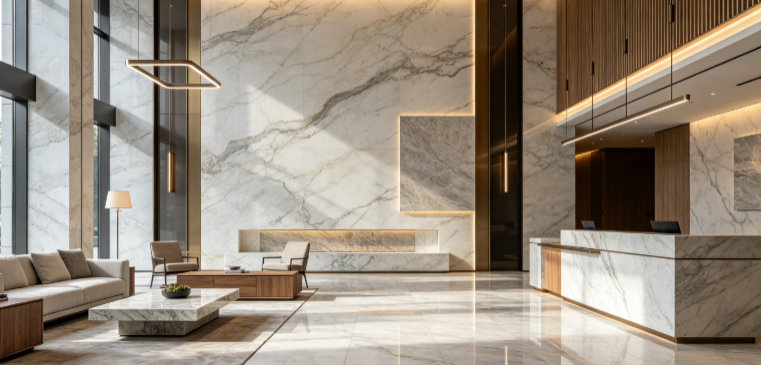
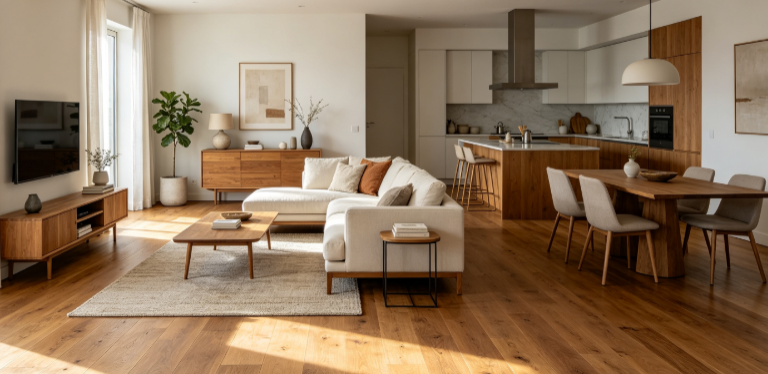
Wood and Wood-Look Materials for Warmer Interiors
Wood is another important element in natural interior design. Its texture and warm appearance can soften contemporary architectural spaces while maintaining a modern aesthetic.
Natural Wood in Residential Spaces
Wood can be used across living rooms, bedrooms, dining areas and other residential spaces.
Wood flooring, for example, can create a warm foundation for modern furniture while helping connect different rooms visually.
In bedrooms, wood can contribute to a more relaxed atmosphere. In dining areas, it can work with stone, lighting and furniture to create a more welcoming environment.
Wood in Commercial Interiors
Wood is also increasingly useful in hospitality and commercial interiors.
Hotels can use wood finishes in guest rooms, corridors and public areas. Offices can incorporate wood into meeting rooms, reception areas and collaborative spaces.
Restaurants can combine wood with stone, metal and warm lighting to create a distinctive atmosphere.
The material therefore works across very different project types.
Combining Wood with Stone and Other Materials
One of the most effective approaches is to combine materials rather than using one material throughout the entire interior.
For example:
Wood + Marble can balance warmth with a refined appearance.
Wood + Tiles can combine natural texture with practical surfaces.
Wood + Metal can create a contemporary industrial character.
Wood + Glass can create a lighter and more open visual effect.
This is why material selection should be considered as part of the overall interior design rather than as isolated product decisions.
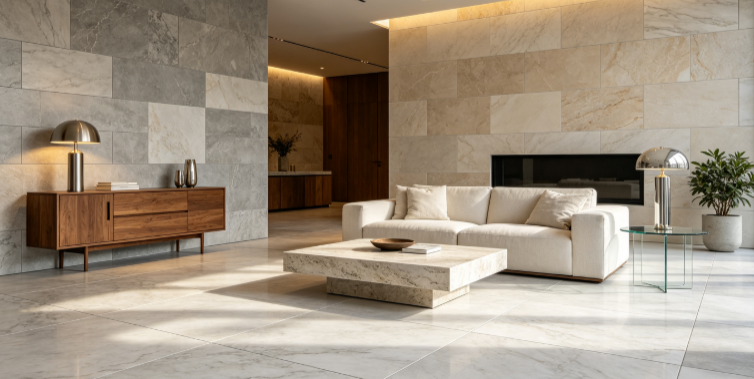
Natural Tiles and Textured Surfaces
Tiles can also contribute to the natural-material trend without relying exclusively on natural stone.
Stone-Look Tiles
Stone-look tiles can bring the visual character of natural stone into different spaces while offering the practical characteristics required for many residential and commercial applications.
They can be used in:
- Bathrooms
- Kitchens
- Living areas
- Hotels
- Restaurants
- Commercial spaces
Textured Tiles
Texture is becoming increasingly important in contemporary interiors.
Instead of relying only on color, textured surfaces can create depth through subtle changes in light and shadow.
This can be particularly effective on feature walls, bathroom surfaces and selected commercial areas.
Neutral and Earth-Tone Tiles
Neutral shades such as warm beige, sand, taupe and other earth-inspired tones can work well with wood, stone and contemporary furniture.
Rather than creating a completely monochromatic space, these colors allow different materials to provide visual variation.
Natural Materials in Furniture and Interior Details
Furniture plays an important supporting role in a natural interior.
The goal is not necessarily to fill a room with wooden furniture. Instead, furniture can introduce complementary materials, textures and shapes.
Wood Furniture
Wood furniture can reinforce the warmth of a natural material palette.
Dining tables, cabinets, side tables and other furniture pieces can coordinate with wood flooring, stone surfaces and neutral tiles.
Stone and Wood Combinations
Combining different materials can create stronger visual contrast.
A stone-topped table with a wooden structure, for example, can connect two major material elements within the same space.
For more contemporary interiors, metal and glass can also be introduced without losing the warmth created by wood and stone.
Natural Fabrics and Soft Textures
Upholstery and other soft surfaces can further balance hard materials such as stone, tiles and glass.
This combination is particularly useful in living rooms, bedrooms, hotels and hospitality environments.
Our Modern Furniture and Luxury Furniture collections can be considered alongside other interior materials when developing a cohesive project concept.
Natural Materials and Layered Lighting
Materials do not exist independently from lighting.
The same stone, wood or textured tile can look very different depending on the type and position of lighting used around it.
Warm lighting can emphasize the natural character of wood, while accent lighting can highlight the pattern and texture of stone.
Layered lighting can include:
- General lighting
- Decorative lighting
- Accent lighting
- Wall lighting
- Pendant lighting
For example, a marble feature wall can become a focal point when combined with carefully positioned accent lighting.
This is why Lighting should be considered alongside material selection rather than treated as the final step of an interior project.
Natural Materials in Bathrooms and Kitchens
Bathrooms and kitchens are particularly suitable for combining natural textures with practical surfaces.
Natural Materials in Modern Bathrooms
A modern bathroom can combine:
- Marble
- Stone-look tiles
- Textured tiles
- Wood-look finishes
- Bathroom vanities
- Mirrors
- Lighting
Rather than using the same finish across every surface, designers can create contrast between walls, flooring, furniture and fixtures.
Explore Bathroom Solutions when planning a bathroom around natural materials.
Natural Materials in Modern Kitchens
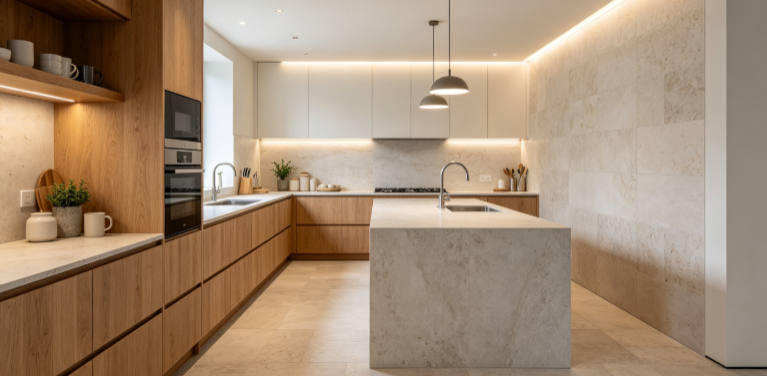
Kitchens can combine wood, stone, tiles, metal and glass in different proportions.
For example, wood cabinetry can be paired with a stone surface and neutral tiles, while decorative lighting adds another layer to the design.
This approach can create a modern kitchen without making the space feel overly uniform.
Our Kitchen Cabinets can also be considered as part of a broader material and interior design concept.
Natural Materials for Residential Projects
Natural materials can be adapted to different residential project sizes rather than being limited to large luxury homes.
Villas and Houses
Larger homes provide opportunities to create a consistent material palette across living rooms, bedrooms, kitchens, bathrooms and outdoor-connected areas.
Wood, marble, stone, tiles, furniture and lighting can be coordinated around a central design concept.
However, the goal is not necessarily to use every natural material available. Selecting a few complementary materials can often create a more coherent result.
Apartments
Apartments may require a more space-conscious approach.
Natural materials can still be introduced through selected flooring, feature walls, furniture, bathroom finishes and lighting.
Customization can also help when standard furniture or finishes do not fit the dimensions of a particular room.
Natural Materials for Commercial Projects
The same principles can be applied to commercial interiors, although function and durability become particularly important.
Hotels
Hotels can use natural materials to create a memorable atmosphere across:
- Lobbies
- Guest rooms
- Restaurants
- Corridors
- Bathrooms
Wood, stone, tiles, furniture and lighting can be coordinated to create a consistent hospitality experience.
Offices
Modern offices can use wood and stone to make reception areas, meeting rooms and working environments feel warmer and more welcoming.
Natural materials can also be combined with glass and metal to maintain a contemporary appearance.
Restaurants and Other Commercial Spaces
Restaurants, schools and other commercial environments can use textured surfaces and natural materials to create distinctive spaces.
The appropriate combination depends on the project’s function, traffic, maintenance requirements and design direction.
How to Combine Natural Materials Without Making a Space Look Heavy
Using natural materials does not mean using as many different materials as possible.
Balance Wood with Stone
Wood can soften stone, while stone can add contrast and structure to wood.
Use Texture Instead of Too Many Colors
Different surface textures can create visual interest without requiring a complicated color palette.
Combine Warm and Neutral Tones
Warm wood, neutral stone and soft earth tones can create a cohesive contemporary interior.
Use Lighting to Highlight Materials
Lighting can emphasize the texture and depth of selected surfaces.
Keep the Overall Interior Cohesive
Furniture, doors, windows, flooring, lighting and architectural materials should support the same overall design direction.
This is where professional interior design becomes particularly valuable. Instead of selecting products independently, the entire material palette can be considered together.
When Custom Design and Custom Furniture Make Sense
Not every project requires customization, but it can become valuable when standard products cannot meet specific requirements.
Custom design and furniture can be useful when:
- Room dimensions are unusual
- Furniture needs specific dimensions
- A particular material or finish is required
- Multiple spaces need a consistent appearance
- Furniture needs to coordinate with architectural elements
- A project has a distinctive design concept
Customization can also be limited to a single space.
For example, a client may only need a customized bathroom, kitchen, bedroom or living room rather than customization throughout the entire property.
This flexibility allows the scope of design and manufacturing to match the actual project requirements.
How to Bring Natural Materials into Your Interior Project
A successful natural-material interior starts with the project rather than an individual product.
Step 1: Define the Interior Style
Determine the overall design direction before selecting individual materials.
Step 2: Understand the Space and Function
Residential and commercial spaces have different requirements for comfort, durability, maintenance and circulation.
Step 3: Select the Main Materials
Choose the key materials first, such as wood, stone or tiles.
Step 4: Coordinate Furniture and Lighting
Furniture and lighting should complement the material palette rather than compete with it.
Step 5: Customize Where Necessary
If standard dimensions or products do not fit the project, consider customized solutions.
Step 6: Source Products According to the Project
For larger projects, coordinating multiple product categories can help maintain consistency across the interior.
This project-based approach is particularly useful when a client requires more than one product category.
Explore Natural Materials and Interior Products at Our Showrooms
Seeing materials and products in person can make it easier to compare textures, finishes, colors and proportions.
George Group’s showrooms allow clients to explore different interior categories as part of the same project journey.
The Furniture Showroom provides an opportunity to explore furniture styles and finishes.
The Wood Flooring Showroom focuses on flooring options for residential and commercial interiors.
The Marble & Stone Showroom allows clients to evaluate natural stone and related finishes.
The Tiles Showroom provides options for different interior spaces and applications.
The Lighting Showroom allows lighting products to be considered alongside the overall material palette.
The Bathroom Showroom brings vanities, bathroom products and related finishes together.
The Doors & Windows Showroom provides architectural products that can complement the interior design.
Exploring several categories together can be especially useful for clients working on larger residential or commercial projects.
Why Work with George Group for Your Interior Project?
Natural materials are most effective when they are considered as part of a complete design rather than purchased individually.
George Group combines interior design, 3D visualization, product sourcing and customization for residential and commercial projects.
The scope can be adapted to the project. A client may need furniture for one room, customized products for a particular space, several building material categories or support for a broader interior project.
The product range includes furniture, tiles, lighting, doors and windows, bathroom products, kitchen cabinets, marble and stone, as well as other interior categories.
This allows different products to be considered together when developing the overall design.
For clients who visit China, the physical showrooms also provide an opportunity to compare materials and discuss project requirements directly with the team.
Conclusion
Natural materials are becoming an important part of contemporary interiors because they bring warmth, texture and character to modern spaces. From marble and wood to textured tiles, furniture and lighting, these materials can be adapted to villas, apartments, hotels, offices and other commercial projects.
The most successful approach is not simply choosing natural materials, but coordinating them with the space, function and overall design concept.
Planning a residential or commercial interior project? Talk to George Group about design, customization and product sourcing.


