Choosing the right windows for a hotel project involves more than selecting a frame style or glass type. Hotel windows need to balance design, safety, durability, thermal performance, sound insulation, maintenance, and project requirements.
Unlike residential windows, hotel windows are part of a larger commercial project where guest comfort, building performance, interior design, and long-term operation all need to work together. The right hotel window system can influence the appearance of the building as well as natural lighting, ventilation, energy efficiency, and noise control.
So, how should you choose windows for a hotel project?
What Makes Hotel Windows Different from Residential Windows?
Hotel windows often have more demanding requirements than residential windows because hotels contain guest rooms, lobbies, restaurants, meeting rooms, bathrooms, corridors, and other public spaces.
Each area may require different levels of ventilation, privacy, natural light, sound insulation, and safety.
For example, hotel room windows should provide guests with a comfortable indoor environment while helping reduce external noise. Large facade windows may need to support the architectural concept, while lobby windows may focus more on natural light and visual impact.
For a new hotel construction project or hotel renovation, it is therefore useful to define the requirements of each area before choosing a specific window system.

Consider the Hotel Location and Environment
The location of the hotel is one of the first factors to consider.
A hotel near a busy road, airport, railway station, or commercial district may have very different requirements from a resort in a quiet area.
Hotels in busy urban locations may need stronger acoustic performance and noise reduction. Hotels in hot climates may place greater emphasis on solar control and thermal insulation, while coastal projects may need materials with good resistance to humidity and corrosion.
When choosing hotel windows for projects, consider the climate, surrounding environment, building orientation, and local conditions rather than using the same specification for every project.
Choose the Right Window Material
Window materials influence appearance, durability, maintenance, insulation, and design flexibility.
Aluminum Windows for Hotels
Aluminum windows are widely used in commercial and hospitality projects because of their strength, slim profiles, and design flexibility.
Aluminum windows for hotels can be suitable when the architectural design requires large glass areas or contemporary facade lines. They can also be customized with different finishes and configurations.
uPVC Windows for Hotel Projects
uPVC windows can be considered for hotel applications where thermal insulation and relatively low maintenance are important.
The choice between aluminum and uPVC should depend on the hotel’s location, design, climate, performance requirements, and overall project specifications.
Rather than selecting a material based only on appearance or initial cost, project teams should evaluate the complete window system.

Pay Attention to Hotel Window Glass
Glass is just as important as the window frame.
For hotel room windows, glass selection can affect daylight, thermal performance, acoustic insulation, privacy, and safety.
Depending on the project, different glazing configurations may be required, including insulated glazing, safety glass, solar-control glass, or acoustic glass.
A hotel located in a noisy city may prioritize acoustic performance, while a hotel in a hot climate may focus more on solar heat control.
The right glass should therefore be selected according to the actual performance requirements of the building.
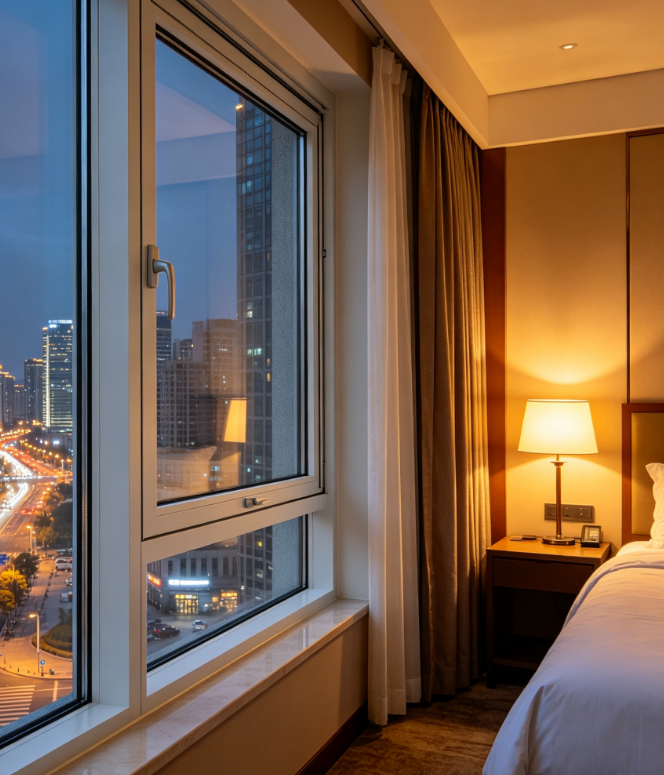
Consider Sound Insulation
Guest comfort is a major consideration in hospitality projects.
External traffic, construction, nightlife, airports, or other surrounding activities can affect the guest experience. This makes soundproof hotel windows and acoustic window systems important for some projects.
However, acoustic performance does not depend on glass alone. The frame, seals, opening configuration, installation quality, and surrounding wall construction can also affect the final result.
When selecting hotel windows for noise reduction, consider the complete window assembly and discuss acoustic requirements with the supplier early in the project.
Evaluate Thermal Performance and Energy Efficiency
Windows can affect a hotel’s energy performance because large areas of glazing may contribute to heat gain or heat loss.
For this reason, energy-efficient hotel windows can be an important consideration during hotel construction or renovation.
Thermal performance can depend on:
- Window frame and profile
- Glass configuration
- Insulated glazing
- Sealing and weatherproofing
- Window orientation
- Solar exposure
- Installation quality
The ideal specification depends on the project’s climate and building requirements. The goal is to select a window system that provides the required performance without unnecessary complexity.
Consider Hotel Window Safety
Safety requirements should also be considered when choosing hotel windows.
Hotels accommodate many guests who may not be familiar with the building. Guest rooms, bathrooms, corridors, balconies, and public areas may have different safety requirements.
Depending on local regulations and building design, project teams may need to consider:
- Safety glass
- Window opening limitations
- Hardware quality
- Fall protection
- Emergency access
- Glass strength
- Secure locking systems
The exact requirements vary by project location, so applicable local building standards should be confirmed before finalizing specifications.
Match Windows with Hotel Design
Windows are functional building components, but they also contribute to the hotel’s architectural identity.
The frame finish, glass appearance, proportions, and opening style should work with the hotel’s facade and interior design.
A contemporary hotel may use slim aluminum frames and large glazing areas, while a resort may prioritize large openings that emphasize views and natural light.
Inside guest rooms, windows also interact with furniture, curtains, lighting, flooring, and other interior elements. This makes hotel window design part of the wider architectural and interior planning process.
Standard or Custom Hotel Windows?
Standard window systems can be suitable for projects with repeated room layouts and straightforward specifications.
However, hotels often contain different room types and architectural spaces. Guest rooms, suites, restaurants, lobbies, meeting rooms, and public areas may require different dimensions or configurations.
In these cases, custom hotel windows can provide greater flexibility.
Customization may include:
- Window dimensions
- Frame finishes
- Glass specifications
- Opening configurations
- Hardware
- Performance requirements
Accurate drawings, measurements, technical specifications, and early project coordination can help reduce problems during production and installation.
Consider Durability and Maintenance
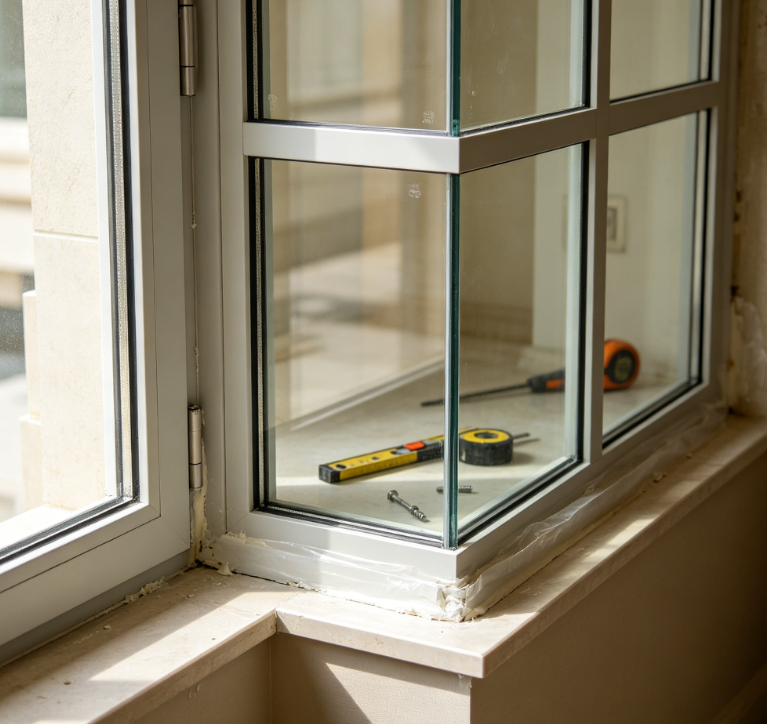
Hotel windows are exposed to frequent use and need to perform consistently over a long operating period.
This makes hotel window durability an important consideration. Project teams should evaluate the quality of frames, hardware, seals, glass, and surface finishes.
Maintenance should also be considered. A window that looks attractive when newly installed may not be the most practical choice if its materials or hardware are difficult to maintain.
For hotel owners, considering lifecycle performance during procurement can help support long-term operation.
What Should You Look for in a Hotel Window Supplier?
Choosing a suitable hotel window manufacturer or supplier is an important part of hotel procurement.
Project teams can evaluate suppliers based on:
- Experience with hotel or commercial projects
- Ability to provide customized solutions
- Window and glass specifications
- Hardware and finishing options
- Quality control
- Packaging and delivery
- Technical communication
- Project coordination
For international hotel projects, communication and coordination are particularly important because architects, contractors, suppliers, and project owners may be located in different countries.
For developers and contractors looking for a hotel project supplier from China, it can also be useful to consider whether the supplier can coordinate multiple building material categories rather than supplying windows alone.
Why Consider a One-Stop Supplier?
Windows are only one part of a hotel project.
A typical hotel may require furniture, doors, windows, lighting, bathroom products, tiles, marble and stone, flooring, and other interior materials. Coordinating every category through separate suppliers can increase communication and project management requirements.
A one-stop hotel building materials supplier provides another approach by coordinating multiple categories through one project partner.
George Group provides building materials and interior solutions covering furniture, lighting, tiles, marble and stone, doors, windows, and bathroom solutions.
For hotel developers, contractors, and project procurement teams, this integrated approach can be useful when a project requires multiple product categories, customized specifications, and coordinated delivery.
George Group can also support project requirements through customization, design coordination, and project-related services.
Choosing Hotel Windows as Part of the Complete Project
Before making a final decision, hotel project teams should consider:
- Project location and climate
- Architectural style
- Window material
- Glass configuration
- Thermal performance
- Acoustic performance
- Safety requirements
- Durability and maintenance
- Customization requirements
- Installation and coordination
- Supplier experience
- Overall procurement requirements
Most importantly, hotel windows should not be selected in isolation. Their specifications should work with the building facade, interior design, furniture, lighting, doors, flooring, and other materials.
For larger hotel construction and renovation projects, working with an experienced project supplier can make it easier to coordinate these requirements from design through procurement and installation.
Hotel Window Solutions from George Group
George Group supports residential and commercial projects with building materials and interior solutions, including windows, doors, furniture, lighting, tiles, marble and stone, and bathroom solutions.
For hotel projects, George Group can work with project requirements to coordinate suitable products and customized solutions according to the project’s design, application, and specifications.
If you are planning a new hotel, hotel renovation, resort, or other hospitality project, window selection can be considered together with the wider building materials and interior requirements.
Explore George Group’s Hotel Projects, Showroom, and One-Stop Solutions to see how different product categories can be coordinated for a complete project.
Conclusion
Choosing windows for a hotel project requires a balance between appearance, performance, safety, durability, and project coordination.
The right solution depends on the hotel’s location, climate, architectural design, acoustic and thermal requirements, and how the windows coordinate with the overall project.
For hotel owners, developers, architects, and contractors, it is important to look beyond the individual product and consider the supplier’s ability to support customization, production, technical coordination, and wider project requirements.
George Group provides one-stop building materials and interior solutions for residential and commercial projects, helping clients coordinate multiple product categories and project requirements through one experienced project partner.