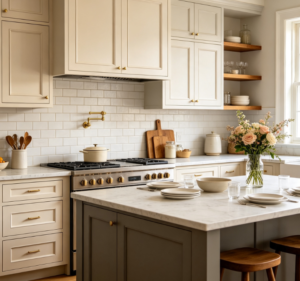
Choosing the right material is one of the most important decisions when planning a kitchen. Kitchen cabinets need to look good, withstand daily use, and work well with the conditions of the space. The best material can also depend on the kitchen layout, design style, maintenance requirements, and whether the project is residential or commercial.
Common kitchen cabinet materials include MDF, plywood, solid wood, acrylic, PVC, and glass. Each has different characteristics, finishes, and suitable applications.
So, what are the best materials for kitchen cabinets? There is no single answer for every project. The right choice depends on what you need the cabinets to achieve.
What Materials Are Commonly Used for Kitchen Cabinets?
Kitchen cabinets can be made using different materials for the cabinet structure, doors, and finishes. Understanding the main options makes it easier to compare them.
MDF Kitchen Cabinets
MDF, or medium-density fiberboard, is widely used for modern kitchen cabinets. Its smooth and consistent surface makes it suitable for painted and lacquered finishes.
MDF works particularly well when a project requires clean lines, uniform colors, or a modern appearance. It can also be processed into different shapes and customized for various cabinet designs.
Plywood Kitchen Cabinets
Plywood is made from layers of wood veneer bonded together. Its layered construction provides strength and stability, making it a popular choice for cabinet construction.
Plywood can be suitable for kitchens that experience frequent use or for projects where structural performance is an important consideration. However, plywood quality and construction methods can vary, so the material should be evaluated together with the overall cabinet construction.
Solid Wood Kitchen Cabinets
Solid wood provides a natural appearance with visible grain and variation. It is often associated with traditional, classic, and premium kitchen designs.
Different wood species can create different colors and textures, making solid wood suitable for projects where the natural character of the material is an important part of the design.
Acrylic Kitchen Cabinets
Acrylic is commonly used to create smooth, contemporary cabinet surfaces. It can provide a clean and high-gloss appearance and is often used in modern and minimalist kitchens.
Acrylic kitchen cabinets can be a good option when visual consistency and a sleek surface are priorities.
PVC Kitchen Cabinets
PVC can be used for cabinet doors and other kitchen components. It offers a range of surface options and is relatively easy to maintain.
Its suitability depends on the specific product construction and the conditions of the kitchen, particularly where moisture exposure is a concern.
Glass Kitchen Cabinets
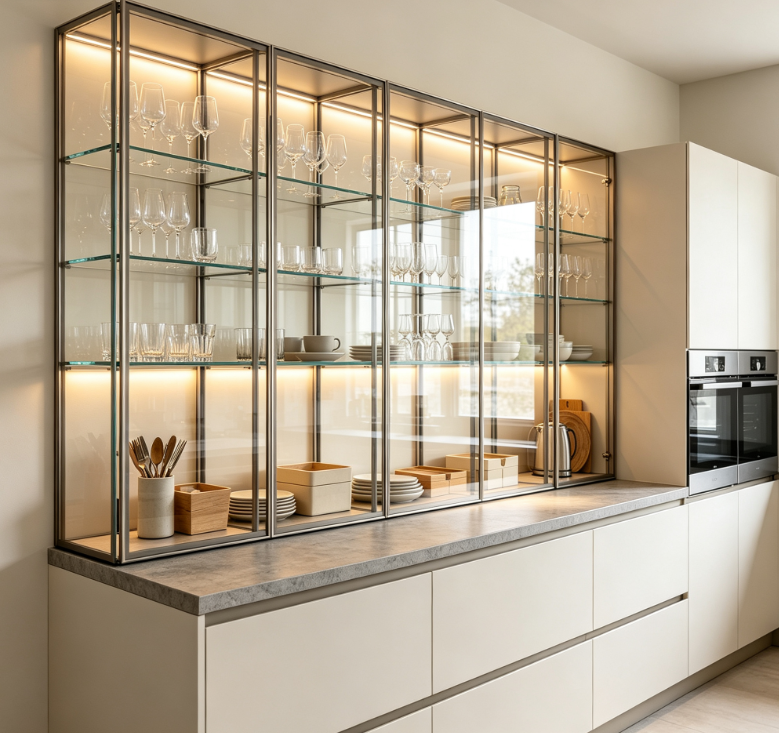
Glass is usually used as part of the cabinet door rather than as the entire cabinet structure. Glass doors can be combined with other cabinet materials to create display areas or add visual openness to a kitchen.
Clear, frosted, and textured glass can produce different effects and work well with contemporary kitchen designs.
Which Kitchen Cabinet Material Is Best?
The best kitchen cabinet material depends on the priorities of the project.
For a modern kitchen with smooth painted surfaces, MDF can be a practical choice. For projects where cabinet strength and stability are important, plywood may be more suitable. Solid wood is often chosen when natural texture and a traditional appearance are priorities.
Acrylic can work well for sleek, contemporary kitchens, while PVC offers another option for projects where surface maintenance and specific finishes are important. Glass is useful when the design calls for display cabinets or greater visual connection.
Instead of ranking materials from best to worst, it is more useful to ask what the kitchen actually requires.
The quality of the material also matters. Cabinet construction, edge treatment, hardware, surface finish, and installation can all affect the final performance of a kitchen.
MDF vs Plywood vs Solid Wood: What Is the Difference?
MDF, plywood, and solid wood are three of the most commonly considered materials, but they serve different purposes.
MDF has a smooth and consistent surface, making it particularly suitable for painted, lacquered, and modern cabinet designs. It offers flexibility in appearance and is often used where a uniform finish is desired.
Plywood focuses more on structural strength and stability. Its layered construction makes it suitable for cabinet components where these properties are important.
Solid wood offers something different: natural material character. Grain patterns, color variations, and texture become part of the overall kitchen design.
This means that choosing between MDF, plywood, and solid wood is not simply a question of which material is stronger or more expensive. The decision should consider the desired appearance, cabinet construction, environment, maintenance, and project requirements.
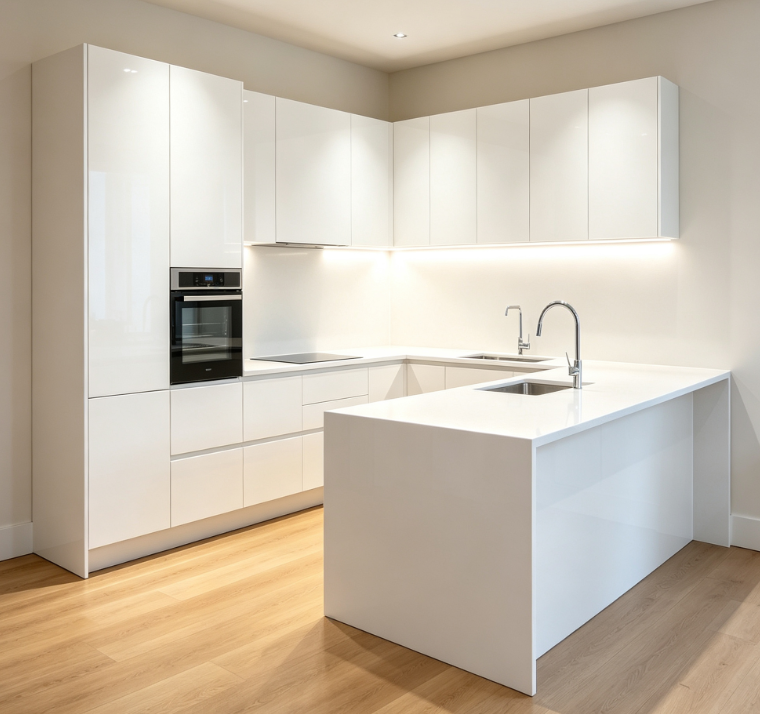
Does the Cabinet Door Material Matter as Much as the Cabinet Structure?
Yes. The material used for the cabinet door is not necessarily the same material used for the cabinet carcass.
A kitchen cabinet can combine different materials to achieve both functional and visual goals. For example, a project may use one material for the cabinet structure and another for the doors and visible surfaces.
Other components also affect the final result, including shelves, drawer systems, hinges, handles, edge treatment, and countertops.
This is why looking only at the material name is not enough when comparing kitchen cabinets. Two cabinets made with similar materials can perform differently depending on their construction and manufacturing quality.
What Should You Consider When Choosing Kitchen Cabinet Materials?
Material selection should start with the actual conditions of the kitchen.
1. Consider the Kitchen Environment
Kitchens are exposed to humidity, heat, cooking activities, and occasional water contact. Ventilation and the location of sinks and appliances can also affect the environment.
For kitchens in humid or coastal climates, moisture management becomes especially important. The material itself is only part of the solution; proper construction, edge sealing, installation, and ventilation also matter.
2. Consider How the Kitchen Will Be Used
A family kitchen used several times a day may have different requirements from a guest apartment or a hotel kitchen.
Residential kitchens can prioritize appearance, storage, and ease of maintenance. Hotels, restaurants, and other commercial spaces may place greater emphasis on durability, repeated use, cleaning, and consistency across multiple units.
3. Match the Material to the Design Style
The material and finish should support the overall interior style.
MDF and acrylic can work well with modern and minimalist kitchens. Solid wood can complement traditional or warm residential interiors. Glass can add a lighter and more open appearance, while different finishes can be combined to create contrast.
The right choice is not only about technical performance. It should also fit the visual language of the space.
4. Think About Maintenance
Kitchen cabinets are exposed to food, grease, moisture, and frequent cleaning. Consider how easily the selected surface can be cleaned and maintained.
The finish is particularly important. Matte, glossy, lacquered, acrylic, wood-effect, and other surfaces can have different maintenance requirements.
5. Consider Customization Requirements
Not every kitchen has standard dimensions. Apartments may have compact layouts, while larger residential or commercial projects may require specific cabinet configurations.
If you need unusual dimensions, specific colors, integrated storage, or special finishes, choose materials that can be processed and customized according to the design.
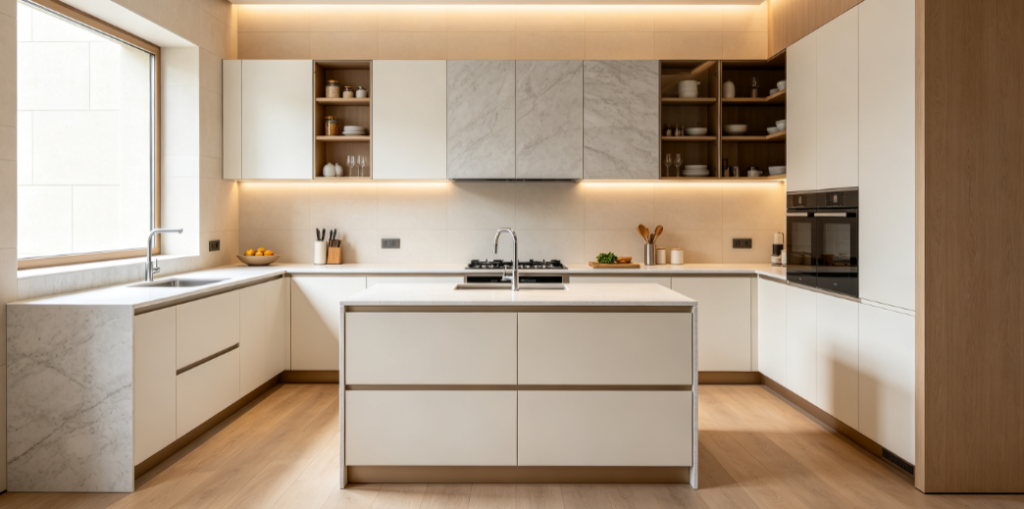
Which Kitchen Cabinet Materials Are Best for Different Projects?
Different projects can lead to different material priorities.
Apartments
Apartment kitchens often need to make efficient use of limited space. Modern finishes, easy maintenance, and customized dimensions can be important.
MDF, acrylic, PVC, and glass can all be considered depending on the design and functional requirements.
Villas and Large Residential Kitchens
Larger residential kitchens usually allow more freedom in material selection. MDF, plywood, solid wood, acrylic, and glass can all be incorporated into different designs.
The choice can depend heavily on the desired style, storage requirements, and how the kitchen connects with the rest of the home.
Hotels
Hotel projects often require consistency across multiple rooms or units. Durability, maintenance, appearance, and reliable production are important considerations.
Material selection should therefore be considered together with cabinet construction and the requirements of the overall project.
Restaurants and Commercial Spaces
Commercial cabinetry can experience frequent use and regular cleaning. Storage cabinets, service-area cabinetry, and front-of-house cabinets may require different material and finish combinations.
In these projects, durability, cleaning, moisture exposure, and consistent manufacturing should be considered from the beginning.

Are Custom Kitchen Cabinets Better Than Standard Cabinets?
Custom kitchen cabinets are not automatically better than standard cabinets. Their main advantage is the ability to adapt the cabinets to the actual requirements of a space.
Customization can be particularly useful for:
- Unusual room dimensions
- Compact apartment kitchens
- Open-plan kitchens
- Specific storage requirements
- Matching an existing interior
- Whole-house projects
- Hotel and commercial projects
Customization can include cabinet dimensions, layouts, materials, colors, finishes, storage functions, and door styles.
The goal of customization is not simply to make the kitchen more elaborate. It is to make the cabinets work properly within the available space and project requirements.
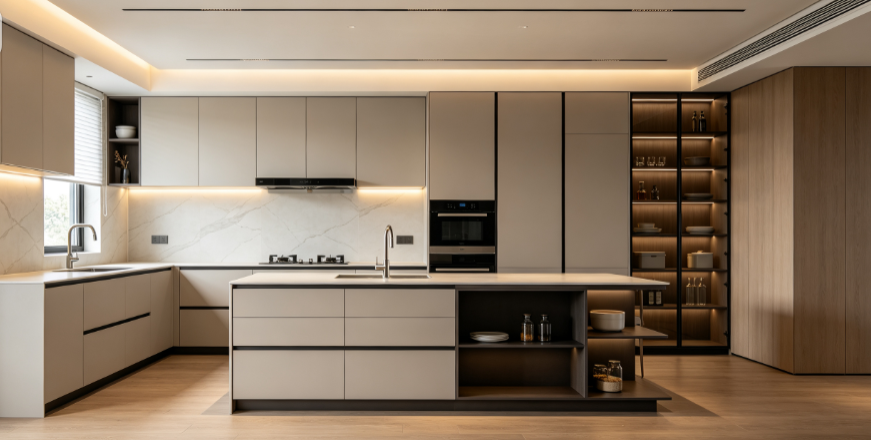
How Do Kitchen Cabinet Finishes Affect Material Choice?
The finish can significantly change the appearance of a cabinet.
Lacquered surfaces can create a smooth and uniform appearance. Acrylic can provide a sleek contemporary finish, while PVC offers different surface options. Wood finishes can introduce natural warmth, and glass can be used to create visual contrast or display areas.
This is why material and finish should be considered together.
For example, MDF may be selected because it provides a suitable surface for a particular painted finish. The final appearance then depends on both the underlying material and the finishing process.
What About Kitchen Cabinet Hardware and Construction?
Good kitchen cabinets depend on more than the board or surface material.
Hardware such as hinges, drawer systems, handles, and other fittings affects everyday usability. Cabinet joints, edge treatment, manufacturing precision, and installation also influence the final result.
For a complete kitchen project, it is useful to evaluate four areas together:
Material + Construction + Hardware + Installation
This approach gives a more accurate picture of cabinet quality than focusing on the material name alone.
How Can You Choose the Right Kitchen Cabinet Material?
Before selecting a material, consider five basic questions:
- What type of kitchen are you planning?An apartment, villa, hotel, restaurant, and other commercial space may have different requirements.
- How much daily use will the kitchen receive?Frequent use may require greater attention to durability and maintenance.
- What design style do you want?The material and finish should support the overall interior style.
- Do you need standard or customized dimensions?Custom dimensions and storage requirements can influence which materials and construction methods are appropriate.
- What are the environmental conditions?Humidity, ventilation, heat, and water exposure should all be considered.
Once these questions are answered, it becomes easier to narrow down the most suitable kitchen cabinet material.
Can You Combine Different Kitchen Cabinet Materials?
Yes. Combining materials is common in both residential and commercial kitchens.
For example, a kitchen can combine wood-effect finishes with glass doors, or use different materials for the cabinet structure and visible doors.
Using multiple materials can create visual contrast while also allowing different parts of the kitchen to meet different functional requirements.
This approach is particularly useful for customized kitchens where appearance, storage, and practical performance all need to work together.
Why Visit a Kitchen Cabinet Showroom?
Online images can show the overall appearance of a kitchen, but they cannot always communicate the actual texture, surface finish, color, door thickness, hardware, or construction quality.
Visiting a kitchen cabinet showroom allows you to compare different materials and finishes in person. It can also make it easier to discuss cabinet layouts, storage requirements, and customization options.
For larger projects, seeing materials and cabinet details before production can help reduce uncertainty during the selection process.
How Can George Group Help With Kitchen Cabinet Projects?
Kitchen cabinet requirements can vary significantly from one project to another. George Group can support different levels of involvement depending on what the client needs.
This can include kitchen cabinet selection, material and finish selection, custom cabinet manufacturing, kitchen layout support, and product customization.
If a project requires design support, George Group can also assist with floor plans and 3D design. However, design is not required for every project. Clients who already have drawings or specifications can also provide their requirements for product selection and customization.
For projects that require broader support, services such as logistics and delivery, installation, and after-sales support can also be coordinated according to the project scope.
This flexible approach allows kitchen cabinets to be selected and manufactured according to the actual requirements of an apartment, villa, hotel, restaurant, or other commercial project.
FAQ
What is the best material for kitchen cabinets?
There is no single best material for every kitchen. MDF, plywood, solid wood, acrylic, PVC, and glass each have different characteristics. The right choice depends on the kitchen environment, usage, design, maintenance, and customization requirements.
Is MDF good for kitchen cabinets?
MDF can be a good option for modern kitchen cabinets, especially when smooth painted or lacquered finishes are required. Its suitability depends on the quality, construction, finishing, and moisture management of the complete cabinet.
Is plywood better than MDF for kitchen cabinets?
Not necessarily. Plywood and MDF have different characteristics and can be suitable for different applications. Plywood is often selected for strength and stability, while MDF is commonly chosen for smooth surfaces and painted finishes.
Are solid wood kitchen cabinets a good choice?
Solid wood can be an excellent choice when natural grain and a traditional or premium appearance are important. However, the specific wood species, construction, environment, and maintenance requirements should be considered.
Can kitchen cabinets be customized?
Yes. Custom kitchen cabinets can be made according to specific dimensions, layouts, materials, colors, finishes, storage requirements, and design specifications.
Conclusion
The best kitchen cabinet material depends on the project rather than a single universal ranking. MDF, plywood, solid wood, acrylic, PVC, and glass each offer different possibilities for appearance, construction, and application.
The right decision should consider the kitchen environment, daily use, design style, maintenance, customization, and overall project requirements. Whether you are planning an apartment, villa, hotel, restaurant, or commercial project, choosing the material together with the right construction and finish can help create kitchen cabinets that are both practical and visually consistent.