Kitchen cabinets play an important role in defining the appearance, functionality and atmosphere of a modern home. Beyond providing storage, their door styles influence how the kitchen connects with the dining area, living room and wider interior design. Two popular options are Shaker kitchen cabinets, known for their framed panel doors, and handleless kitchen cabinets, which create a cleaner, more streamlined appearance.
Both styles can work well in contemporary homes, but they offer different visual effects and practical considerations. The right choice depends on your preferred interior style, available space, storage requirements, material selection and long-term maintenance expectations.
Understanding the differences between Shaker and handleless kitchen cabinets can help you make a more informed decision when planning a kitchen renovation or a complete residential interior project.
What Are Shaker Kitchen Cabinets?
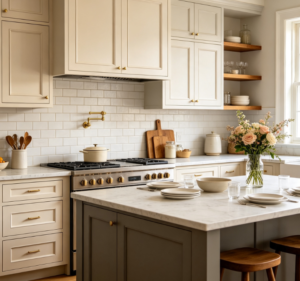
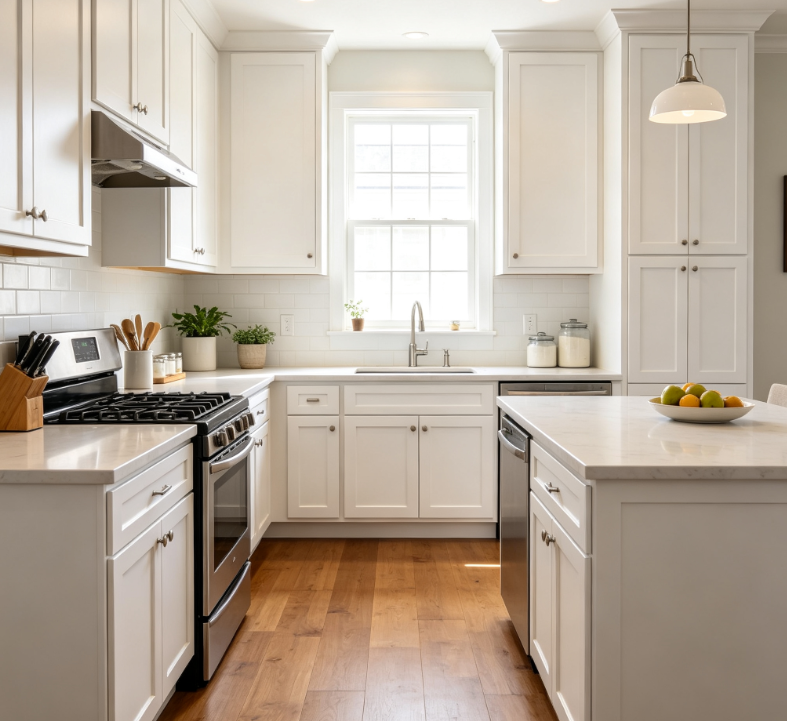
Shaker kitchen cabinets are recognized by their simple, framed door design. A typical Shaker door features a flat central panel surrounded by a rectangular frame, creating subtle depth without excessive decoration. This balance between simplicity and detail allows Shaker cabinets to suit a wide range of interior styles.
Key Design Features of Shaker Cabinets
The defining characteristic of Shaker cabinetry is its structured appearance. Unlike heavily ornamented traditional cabinet doors, Shaker designs use clean lines and restrained detailing. They can therefore complement both classic interiors and modern residential spaces.
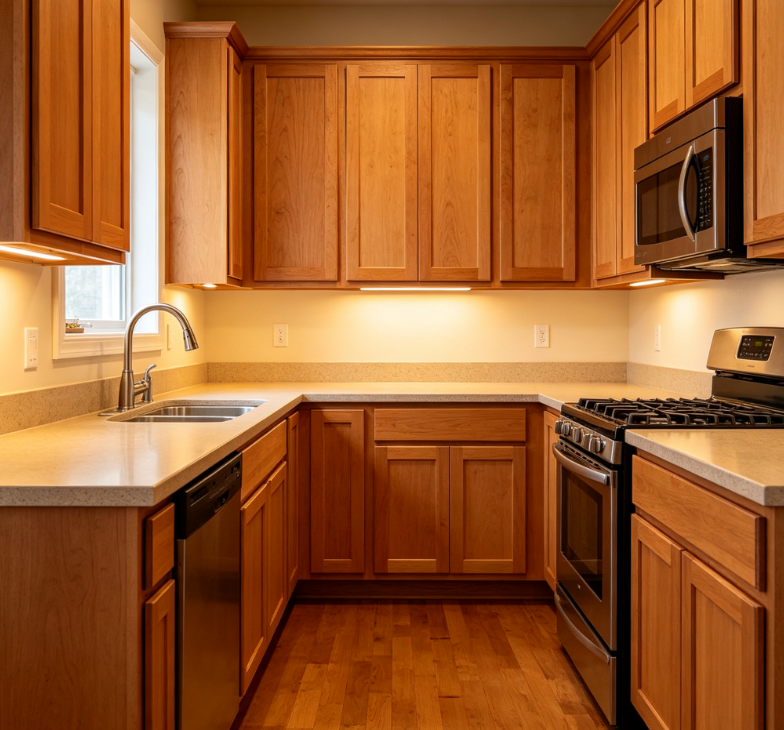
White Shaker kitchen cabinets remain a popular choice because they create a bright, versatile foundation. Grey, beige and natural wood finishes offer alternatives for homeowners who prefer a warmer or more understated palette. Darker finishes can also introduce contrast, particularly when paired with light countertops and backsplashes.
The framed design provides visual definition across cabinet doors and drawer fronts. This can be useful when the kitchen needs a little more character without relying on elaborate decorative elements.
Why Shaker Cabinets Suit Modern Homes
Shaker cabinets work well in transitional interiors that combine contemporary layouts with familiar, timeless details. They can complement a traditional-style villa, a modern apartment or an open-plan kitchen connected to a dining area.
Their versatility also makes it easier to coordinate cabinet finishes with natural stone countertops, ceramic tiles, wood accents and different lighting styles. However, the final effect depends on the proportions of the doors, the selected finishes and the surrounding materials.
What Are Handleless Kitchen Cabinets?
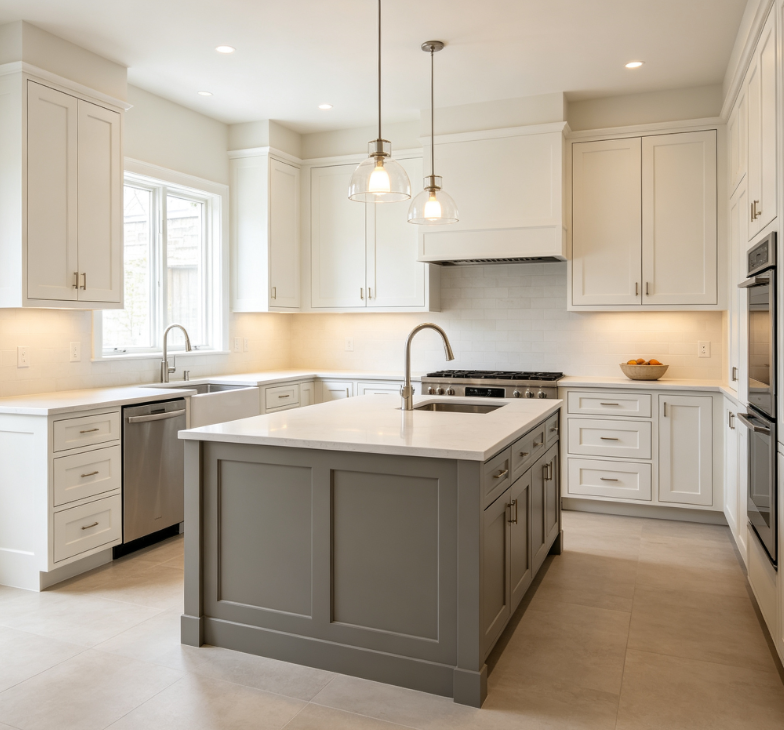
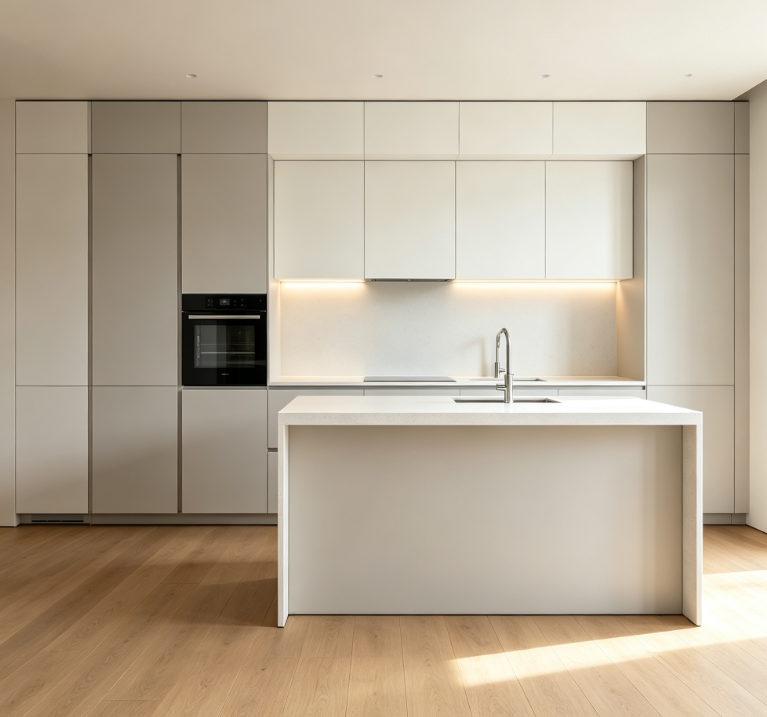
Handleless kitchen cabinets are designed without conventional external handles. Instead, they use alternative opening mechanisms to maintain a cleaner appearance across cabinet doors and drawers. Their simple surfaces and uninterrupted lines make them especially popular in contemporary and minimalist kitchen design.
Common Handleless Cabinet Opening Systems
Not all handleless kitchen cabinets use the same mechanism. Some feature recessed grooves or integrated channels that allow users to grip the edge of a door. Others incorporate slim profiles or push-to-open hardware that releases the door when pressed.
Each system creates a slightly different visual and functional experience. Recessed channels can provide a defined line across the cabinetry, while push-to-open systems can create a more uninterrupted surface. The best option depends on the cabinet construction, hardware quality and the user’s preferences.
It is important to consider how the mechanism feels during daily use, rather than choosing a design based only on photographs. Door weight, opening frequency and installation precision can all influence the experience.
Why Handleless Cabinets Work Well in Contemporary Interiors
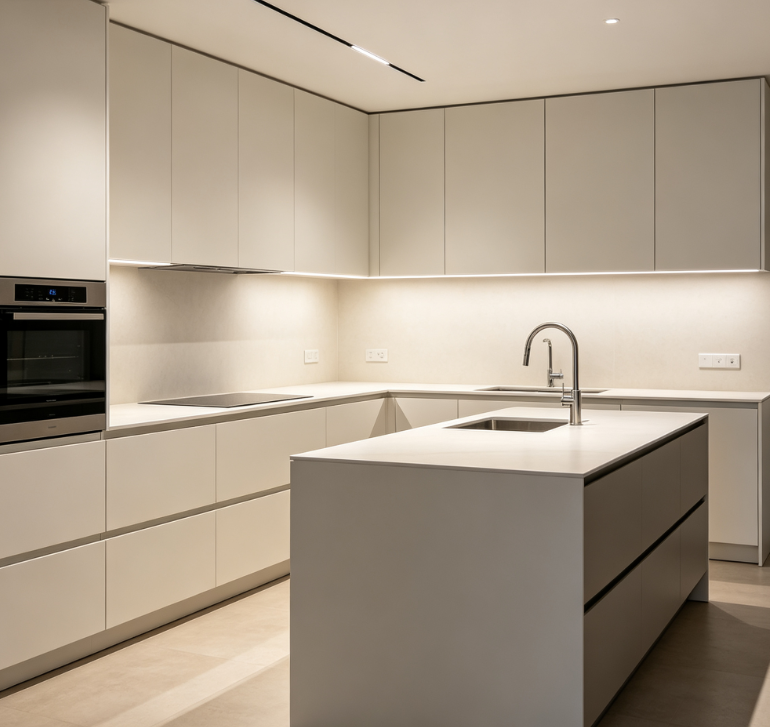
Handleless kitchen cabinets are particularly suitable for modern homes that emphasize clean geometry, simple finishes and visual continuity. Flat-front doors can help create a calm appearance, especially when cabinets extend across a large wall or connect with other built-in storage.
They are often used with neutral colors, matte finishes, wood veneers and stone surfaces. In an open-plan home, this understated appearance can help the kitchen feel connected to the surrounding living space instead of appearing visually separate.
Handleless cabinets can also be customized with contrasting finishes or selected feature panels. Minimalist design does not necessarily mean using only white or grey; material and color combinations can introduce depth without adding conventional door handles.
Shaker vs Handleless Kitchen Cabinets: Key Differences
Although both styles can suit modern homes, their differences affect the kitchen’s appearance, daily usability and maintenance requirements.
Appearance and Design Style
Shaker cabinets feature framed panels that create a more defined, layered appearance. They suit homeowners who appreciate subtle detailing and want a kitchen that balances contemporary design with a familiar, enduring character.
Handleless cabinets generally create a flatter and more continuous visual effect. They are a natural fit for minimalist interiors, streamlined layouts and homes where cabinetry is intended to blend into the architecture.
Neither style is automatically more modern or more luxurious. A well-designed Shaker kitchen can feel sophisticated, while handleless cabinets can look plain if the proportions, finishes or material combinations are poorly considered.
Ease of Use and Daily Functionality
Shaker cabinets can be paired with conventional handles, knobs or other hardware, giving homeowners flexibility in how doors and drawers are opened. The choice of handle can also become a design feature, introducing contrast through its shape, finish or material.
Handleless cabinets eliminate conventional external handles, but their ease of use depends on the selected opening system. Recessed channels provide a gripping point, while push-to-open systems rely on suitable hardware and correct adjustment.
For busy family kitchens, consider how frequently doors are opened, whether users have different accessibility needs and how the chosen system performs with heavier drawers. Testing samples or viewing a completed kitchen can provide a clearer understanding than comparing images alone.
Cleaning and Maintenance
The framed edges of Shaker doors may collect dust or cooking residue more readily than flat surfaces, particularly in kitchens used for frequent frying or cooking. Cleaning is usually straightforward, but the recessed areas may require additional attention.
Handleless cabinets avoid conventional handles, which can reduce the number of external fittings to clean. However, fingerprints may be more noticeable on certain finishes, and recessed channels can also accumulate residue. Push-to-open systems require properly functioning hardware and occasional adjustment if components become misaligned.
Maintenance therefore depends on more than door style. Matte or gloss finishes, cabinet colors, surface coatings and household cooking habits all influence how easily the kitchen can be kept clean.
Materials, Customization and Long-Term Use
Both Shaker and handleless cabinets are available in different materials and finishes. Options may include engineered wood panels, painted finishes, laminates and wood veneers, depending on the cabinet specification.
When comparing options, look beyond the visible door surface. Consider the quality of the cabinet structure, edge treatment, hinges, drawer runners and opening mechanisms. Moisture resistance is particularly important around sinks, dishwashers and other areas exposed to water or steam.
For handleless cabinetry, the precision of the door alignment and opening system is especially important to achieving the intended appearance. For Shaker cabinetry, the consistency of the frames, panel construction and finish quality contributes to the overall result.
A suitable cabinet specification should balance appearance, functionality, maintenance and the expected level of daily use.
Which Cabinet Style Is Better for Your Home?
The best kitchen cabinet style depends on the property, layout and design direction. Instead of assuming one option is universally better, consider how each style supports the way you intend to use the space.
For Apartments and Compact Kitchens
In smaller apartments, handleless cabinets can create a streamlined appearance by reducing visual interruptions across cabinet fronts. This can be particularly effective in open-plan layouts where the kitchen shares space with a living or dining area.
Shaker cabinets can also work well in compact kitchens. Choosing a simple door profile, lighter colors and consistent finishes can help prevent the design from feeling visually crowded.
In either case, storage planning is more important than the door style alone. Well-organized drawers, appropriately sized cabinets and an efficient work triangle can make a greater difference to everyday functionality than the presence or absence of handles.
For Villas and Spacious Open-Plan Kitchens
Larger kitchens provide more opportunities to introduce different materials, colors and design details. Shaker cabinets can bring definition and warmth to a kitchen, particularly when combined with a contrasting island, natural stone countertops or carefully selected hardware.
Handleless cabinets can create a strong architectural effect across long cabinet runs and large islands. They are suitable for homeowners who prefer a contemporary, uncluttered aesthetic.
For villas, the kitchen should also relate to the surrounding rooms. Cabinet finishes, countertop materials, lighting and flooring should be considered together so that the open-plan space feels cohesive.
For Timeless or Minimalist Interiors
Choose Shaker cabinets if you prefer framed details, a familiar sense of character and flexibility across different decorative styles. Choose handleless cabinets if you favor simple surfaces, restrained detailing and a contemporary visual language.
You can also combine elements from both approaches. For example, a kitchen may use Shaker cabinetry on one section and simpler doors elsewhere, provided the proportions, colors and materials are coordinated carefully. A consistent design plan helps prevent the combination from looking accidental.
What to Consider Before Choosing Kitchen Cabinets
Selecting a door style is only one part of planning a successful kitchen. Several additional decisions influence how the finished space looks and performs.
Cabinet Materials and Finishes
Compare material specifications, surface durability, cleaning requirements and resistance to moisture. A finish that looks attractive in a showroom may appear different under your home’s natural and artificial lighting, so it is useful to review samples in the intended environment.
Kitchen Layout and Storage Requirements
Plan cabinet dimensions around appliances, work surfaces, cooking zones and everyday storage needs. Consider how doors and drawers open in relation to walkways and nearby furniture. A visually attractive cabinet design will not perform well if the layout creates unnecessary obstacles.
Coordination with Countertops, Backsplashes and Lighting
Cabinetry should be selected alongside countertops, wall tiles, backsplashes and lighting. Natural stone can introduce texture, while ceramic tiles offer a wide range of colors and surface patterns. Pendant lights or under-cabinet lighting can further influence how cabinet finishes appear.
Coordinating these elements early helps reduce mismatched finishes and unnecessary changes during installation.
Installation Quality and Project Planning
Accurate measurements, appropriate hardware and careful installation are essential to both cabinet styles. Confirm appliance dimensions, plumbing and electrical positions, ventilation requirements and finishing details before production or installation begins.
For a larger renovation or new-build project, planning cabinetry as part of the wider interior scheme can help align material selections, design details and installation schedules.
How George Group Supports Your Kitchen Interior Project
A successful kitchen project involves more than choosing between Shaker and handleless cabinets. Cabinetry needs to work with the countertops, wall finishes, lighting and wider interior design to create a practical and cohesive space.
George Group provides one-stop building materials and interior solutions for residential and commercial projects. For homeowners planning an apartment, villa or complete home interior, coordinating multiple material categories within one project can help simplify the selection process and maintain a consistent design direction.
Depending on the project requirements, homeowners can explore relevant kitchen and furniture options alongside tiles, lighting, marble and stone, and other interior materials. Visiting the George Group showroom can also help with comparing finishes and understanding how different materials work together in a complete interior.
The goal is to select a cabinet style and material combination that suits the property, the household’s needs and the overall design plan, rather than making the decision based on appearance alone.
Frequently Asked Questions
Are Shaker Kitchen Cabinets Suitable for Modern Homes?
Yes. Shaker cabinets can suit modern homes when paired with simple finishes, restrained hardware and a coordinated material palette. Their framed doors provide subtle detail without requiring elaborate decoration.
Are Handleless Kitchen Cabinets Practical for Everyday Use?
They can be practical when the opening mechanism, hardware and installation are properly specified. Consider how the cabinets feel during frequent use and whether the chosen system suits everyone who uses the kitchen.
Which Kitchen Cabinet Style Is Easier to Clean?
Neither style is always easier to maintain. Shaker doors have recessed areas that may need extra attention, while handleless cabinets can show fingerprints or collect residue in recessed channels. Surface finish and cooking habits also matter.
Can Shaker and Handleless Cabinets Be Customized?
Both styles can be customized in terms of colors, finishes, dimensions and storage configurations. The available options depend on the cabinet manufacturer, construction method and project requirements.
Which Cabinet Style Works Best with a Modern Kitchen Design?
Both can work well. Shaker cabinets suit modern interiors that include traditional or transitional details, while handleless cabinets are often chosen for minimalist and contemporary spaces. The best choice depends on the overall design rather than a single style rule.
Conclusion
Shaker and handleless kitchen cabinets offer two different approaches to modern kitchen design. Shaker cabinets provide framed details and a balanced, timeless appearance, while handleless cabinets emphasize clean surfaces and visual continuity. Both can be suitable for apartments, villas and open-plan homes when their materials, layout and installation are carefully planned.
Before making a decision, consider how the cabinetry will work with your storage needs, countertops, tiles, lighting and wider interior scheme. For a complete residential project, George Group can help bring these elements together through its one-stop building materials and interior solutions.