Windows affect much more than the appearance of a building. They influence natural light, ventilation, privacy, noise control, security, maintenance, and the overall comfort of a space. The right choice also depends on the building type, local climate, room function, and project requirements.
For an apartment, villa, hotel, office, or commercial building, the most suitable window may be different. Window type, frame material, glass specification, opening method, size, and customization should therefore be considered together rather than choosing a window based on appearance alone.
What Are the Main Types of Windows?
Different window opening systems are designed for different spaces and requirements. Understanding the main types can make it easier to compare suitable options.
Sliding Windows
Sliding windows open horizontally along a track and do not require additional clearance inside or outside the room. This makes them practical for apartments, bedrooms, living rooms, and areas where space is limited.
They can also provide relatively large glass areas while maintaining a straightforward operating method. For projects where convenient daily use and efficient space utilization are important, sliding windows can be a practical option.
Casement Windows
Casement windows open outward or inward using hinges, depending on the design. Their opening area can provide effective ventilation, making them suitable for bedrooms, living rooms, kitchens, and other areas where airflow is important.
The opening direction and surrounding space should be checked before selecting this type, particularly in apartment or high-density projects.
Awning Windows
Awning windows are hinged at the top and open outward from the bottom. Their configuration can allow ventilation while helping limit direct exposure to rain.
They can be used in bathrooms, kitchens, bedrooms, and other spaces where controlled ventilation is useful.
Fixed Windows
Fixed windows do not open. Their main purpose is to provide natural light and views while maintaining a large glass area.
They are often used alongside operable windows or in areas where ventilation is not required. Large fixed windows can also be used to create stronger visual connections between interior spaces and outdoor areas.
Folding Windows
Folding windows consist of multiple panels that fold to one or both sides. They can create a wide opening and are often considered for villas, restaurants, hospitality spaces, and areas that benefit from a stronger connection between indoor and outdoor environments.
Louver Windows
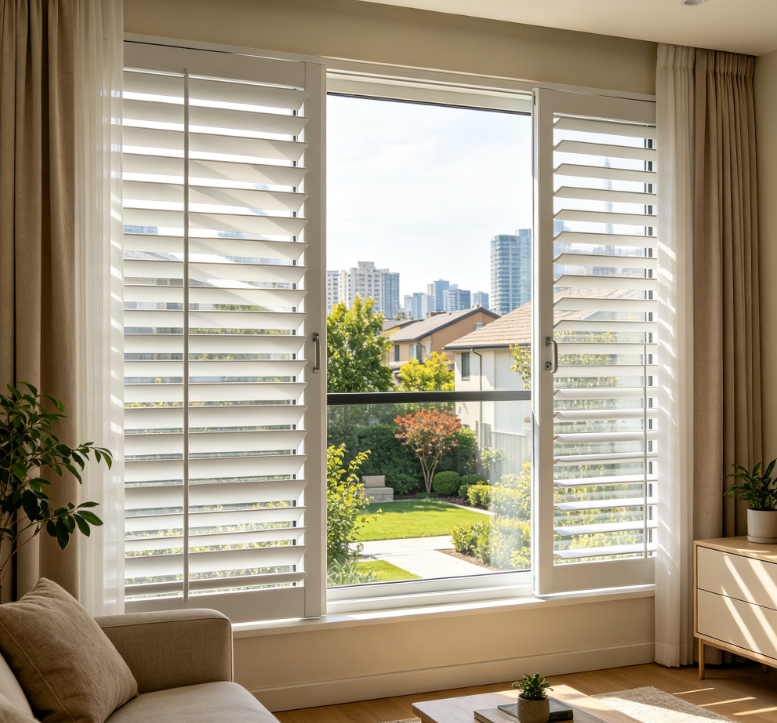
Louver windows use angled glass or other panels that can be adjusted to control airflow. They can be useful in spaces where continuous ventilation is important, although their suitability depends on the project’s privacy, weather, and performance requirements.
What Materials Are Commonly Used for Windows?
The window frame material affects durability, appearance, maintenance, and construction requirements.
Aluminum Windows
Aluminum is widely used for residential and commercial windows because it is durable, relatively lightweight, and suitable for different architectural styles. Aluminum frames can also be finished in different colors and surface treatments.
For modern apartments, villas, hotels, offices, and commercial buildings, aluminum windows can provide a balance between appearance, durability, and practical maintenance.
However, the frame material should not be considered separately from the glass, hardware, construction, and installation. The complete window configuration determines how the product performs in a real building.
How Does Glass Affect Window Performance?
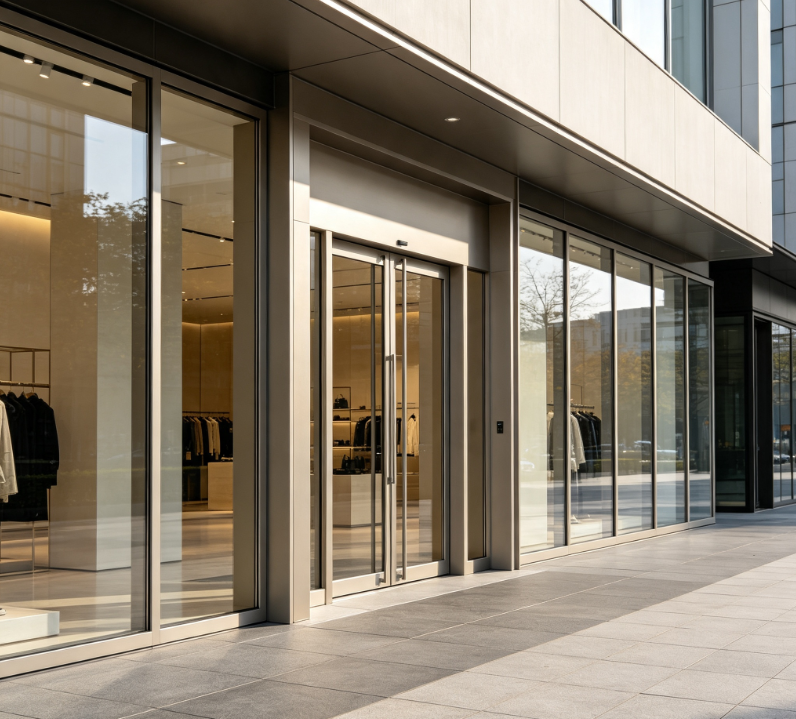
Glass is one of the most important parts of a window. The appropriate specification depends on the building’s location, climate, safety requirements, noise conditions, and desired level of insulation.
Double Glazed Windows
Double glazed windows use two panes of glass separated by an insulating space. This configuration can improve thermal performance and help reduce outside noise compared with some single-glazed configurations.
They can be considered for bedrooms, living spaces, hotels, offices, and buildings where indoor comfort and environmental performance are important.
Laminated Glass Windows
Laminated glass consists of multiple layers bonded together with an interlayer. It can provide additional safety and can also help with noise reduction.
For projects where security, safety, or acoustic performance is an important consideration, laminated glass may be suitable depending on the required specification.
Large Glass Windows
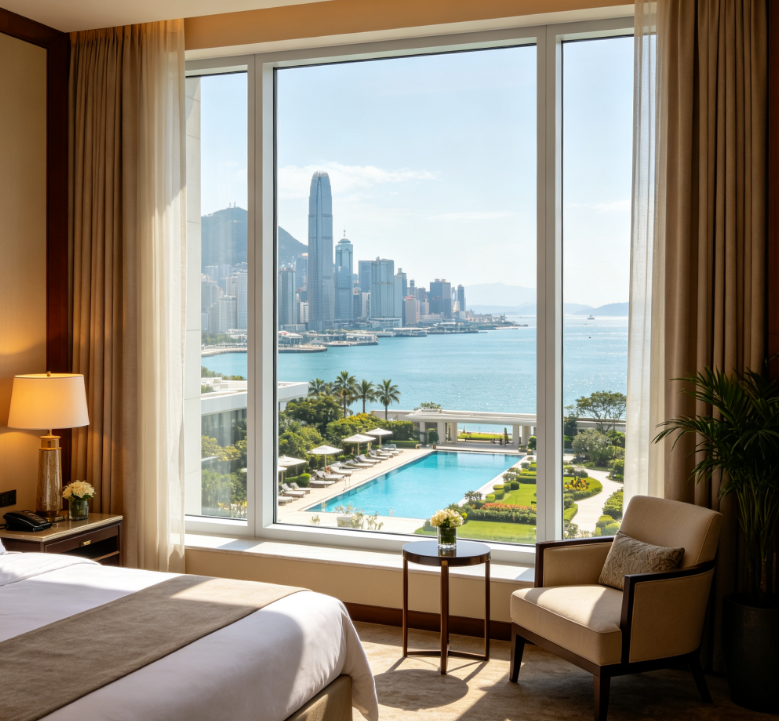
Large glass windows can increase natural light and create wider views. They are commonly considered for villas, high-end apartments, hotels, and commercial spaces.
However, larger glass areas also require careful consideration of structural requirements, glass specification, solar exposure, privacy, cleaning, and installation.
The right glass should therefore be selected according to the actual building conditions rather than simply choosing the largest possible glass area.

What Should You Consider When Choosing Windows?
1. Consider the Building Type
The requirements of an apartment are different from those of a villa or commercial building.
Apartments may prioritize ventilation, space efficiency, noise control, and security. Villas may place more emphasis on large openings, natural light, views, and architectural appearance. Hotels and offices may require consistent appearance, durability, and easier maintenance across multiple rooms or floors.
2. Consider the Local Climate
Climate is particularly important when selecting windows.
Hot environments may require attention to solar exposure and thermal performance. Humid or rainy areas require suitable moisture management and installation. Coastal locations may also require careful consideration of materials, finishes, hardware, and maintenance.
The window itself is only one part of the solution. Installation quality, sealing, drainage, surrounding construction, and building conditions can also influence long-term performance.
3. Consider Ventilation
Think about how much natural airflow each room requires.
Bedrooms, kitchens, bathrooms, and living areas may have different ventilation requirements. A combination of fixed and operable windows can sometimes provide both large glass areas and practical ventilation.
4. Consider Natural Light
Window size, position, glass type, and building orientation all influence the amount of natural light entering a room.
For villas and apartments, larger windows may help create brighter living spaces. In offices and commercial buildings, natural light can also contribute to the overall experience of the interior.
5. Consider Noise and Privacy
Windows can influence how much outside noise enters a building and how easily people can see into a room.
For urban apartments, bedrooms, hotels, and offices, glass specification, window construction, and opening type should be considered together when privacy and acoustic performance are important.
6. Consider Security
Security requirements may vary depending on the building type and location.
Window frame construction, glass specification, locks, hardware, installation, and opening methods can all contribute to the overall security of a window. These factors should be discussed according to the actual project requirements.
7. Consider Cleaning and Maintenance
Window selection should also take future maintenance into account.
Large glass surfaces may require more cleaning. Certain opening configurations may be easier to access than others. For hotels, offices, and high-rise buildings, maintenance requirements can become particularly important because many windows may need to be serviced over time.
What Are the Best Windows for Different Spaces?
There is no single window type that is suitable for every building. The right choice depends on the function and conditions of the space.
Windows for Apartments
Apartment windows often need to balance ventilation, natural light, privacy, noise control, security, and available space.
Sliding, casement, fixed, or combined configurations can be considered depending on the layout and building requirements.
Windows for Villas
Villa projects often provide more flexibility in window size and configuration. Large glass windows, fixed windows, sliding windows, and folding windows may be considered for living rooms, bedrooms, dining areas, and spaces connected to gardens or terraces.
The window design should also work with the architectural style and other elements of the building.
Windows for Hotels
Hotel windows need to consider guest comfort, appearance, durability, maintenance, and acoustic performance.
For projects with many rooms, consistent specifications and reliable manufacturing are also important for maintaining a uniform appearance throughout the building.
Windows for Offices
Office windows can influence natural lighting, ventilation, privacy, and the overall working environment.
The appropriate configuration depends on the office layout, building facade, climate, and requirements for opening and maintenance.
Windows for Commercial Buildings
Commercial buildings may include retail spaces, restaurants, schools, public buildings, and other applications. Their requirements can vary considerably.
High-traffic environments may place greater emphasis on durability and maintenance, while retail and hospitality projects may prioritize appearance and large glass areas.
For larger projects, window selection should be coordinated with the building design, facade, interior requirements, and construction schedule.

Should You Choose Standard or Custom Windows?
Standard windows can be suitable when dimensions, opening methods, materials, and specifications are relatively straightforward.
Custom windows may be more appropriate when a project requires unusual dimensions, large openings, specific glass specifications, special finishes, or a particular combination of materials and hardware.
Customization is especially useful when the available opening does not fit standard dimensions or when the window needs to coordinate closely with the architectural design.
However, customization does not automatically mean that a product is better. The goal should be to match the window with the actual dimensions, environment, function, and technical requirements of the project.
For projects requiring customized products, manufacturing can be coordinated according to the required specifications. Clients who already have drawings or technical requirements can also use those documents as the basis for product development and production.

Do Window Styles Need to Match the Interior?
Windows do not necessarily need to match every interior element exactly, but they should work naturally with the overall design.
Frame color, glass appearance, door style, flooring, furniture, wall finishes, and architectural details can all influence the visual relationship between windows and the interior.
For modern interiors, slim aluminum profiles and large glass areas may create a clean appearance. More traditional projects may require different frame finishes or proportions.
The objective is not perfect visual matching. Instead, the window should support the overall architectural and interior character of the space.
What Should You Check Before Ordering Windows?
Before production, several details should be confirmed:
- Window dimensions and opening sizes
- Opening direction and window type
- Glass specification
- Frame material and finish
- Hardware and locking requirements
- Color and surface treatment
- Installation conditions
- Quantity and project schedule
- Any special customization requirements
For larger projects, confirming these details before production can help reduce misunderstandings between design, manufacturing, and installation.
Why Visit a Windows and Doors Showroom Before Choosing Windows?
Photos and technical specifications are useful, but seeing actual products can make comparison easier.
At a physical showroom, clients can examine window profiles, glass, finishes, hardware, opening mechanisms, and different design combinations. This can be particularly useful when several options appear similar online but feel different when viewed in person.
A showroom visit can also provide an opportunity to discuss project-specific requirements, including dimensions, materials, customization, and installation conditions.
George Group’s Windows & Doors Showroom allows clients to view different window and door options in a physical environment and discuss the requirements of their projects.
How Can George Group Support Window Projects?
Window requirements vary from project to project, so the appropriate service scope should depend on the client’s actual needs.
A client may only need windows according to existing drawings and specifications. Another project may require customized windows and manufacturing. A client may also need help with product selection, design coordination, logistics, installation, or after-sales support.
George Group can coordinate these services according to the project requirements rather than assuming that every client needs the same package.
For residential and commercial projects, window selection can also be coordinated with other building materials and interior products when required. The starting point is always the project’s actual dimensions, specifications, application, and service requirements.
FAQ
What type of windows is best for a home?
The suitable window type depends on the room, climate, ventilation requirements, available space, privacy, and architectural design. Sliding, casement, fixed, awning, and folding windows can all be suitable for different applications.
Are aluminum windows good for homes?
Aluminum windows are widely used in residential buildings because they offer durability, relatively low maintenance, and flexible design options. The complete window configuration, including glass, hardware, construction, and installation, should also be considered.
What is the difference between sliding and casement windows?
Sliding windows move horizontally along a track, while casement windows operate on hinges. Sliding windows can be useful where opening clearance is limited, while casement windows can provide a larger opening for ventilation.
Are double glazed windows suitable for homes?
Double glazed windows can be considered when improved thermal performance, indoor comfort, or noise reduction is important. Their suitability depends on the local climate, building conditions, and overall project requirements.
What type of windows is suitable for apartments?
Apartments often require a balance between natural light, ventilation, privacy, noise control, security, and available space. Sliding, casement, fixed, or combined window configurations can be considered according to the specific apartment layout.
Can windows be customized for different projects?
Yes. Custom windows can be manufactured according to project-specific dimensions, materials, glass specifications, finishes, and other requirements. Customization is particularly useful when standard products do not match the building openings or design requirements.
Conclusion
Choosing windows requires more than comparing appearance or frame materials. Building type, climate, glass specification, ventilation, natural light, privacy, security, maintenance, and customization should all be considered together.
Whether the project is an apartment, villa, hotel, office, or commercial building, the appropriate window should be based on its actual requirements. George Group can support individual window sourcing and customized manufacturing as well as broader project requirements when needed.