Interior doors are easy to overlook when planning an interior project. They may not occupy as much visual space as walls, flooring or furniture, but they influence privacy, movement, functionality and the overall appearance of a room.
Choosing the right interior doors therefore involves more than selecting a color or style. You need to consider how the room will be used, how much space is available, which door type is appropriate, what material and finish will work best, and whether the door needs to be customized.
The right choice can also vary significantly between a bedroom in an apartment, a bathroom in a villa, a hotel room or an office. For larger projects, consistency, durability, specifications and installation requirements also become important.
Whether you are choosing one door or planning doors for an entire property, these are the key factors to consider.
Why Are Interior Doors Important to an Interior Project?
Interior doors connect different areas of a property while providing separation when needed. Their role is both functional and visual.
A bedroom door, for example, may need to provide privacy and help create a quiet environment. A glass door between a living area and another room may instead be selected to maintain visual connection and allow more natural light.
Doors also become part of the overall interior design. Their material, color, proportions and details can influence how furniture, flooring, walls and other elements work together.
For a complete residential or commercial project, choosing doors at the same time as other major interior elements can help create a more consistent result.
What Should You Consider When Choosing Interior Doors?
1. Consider the Room and Its Function
Start with the purpose of the room.
Different spaces have different requirements, so there is no single interior door that is ideal for every application.
For bedrooms, privacy, comfort and appearance are often important. Bathrooms may require greater attention to moisture, privacy and maintenance. A home office may benefit from a door that provides privacy and helps create a focused environment.
In commercial spaces, the requirements can be different again. Hotel rooms, meeting rooms, offices, restaurants and other areas may experience more frequent use and therefore require appropriate durability and functionality.
Understanding the room first makes it easier to narrow down the right door type and material.
2. Choose the Right Door Type
The opening mechanism can have a significant impact on how a door works within a room.
Swing doors are a conventional option for many bedrooms, offices and other interior spaces. They are straightforward to use and can work well where there is enough clearance for the door leaf to open.
Sliding doors can be useful where floor space is limited. Because the door moves along a track rather than swinging into the room, they can help make better use of compact spaces.
Folding doors can create a wider opening and may be suitable for spaces where flexibility or a larger connection between areas is required.
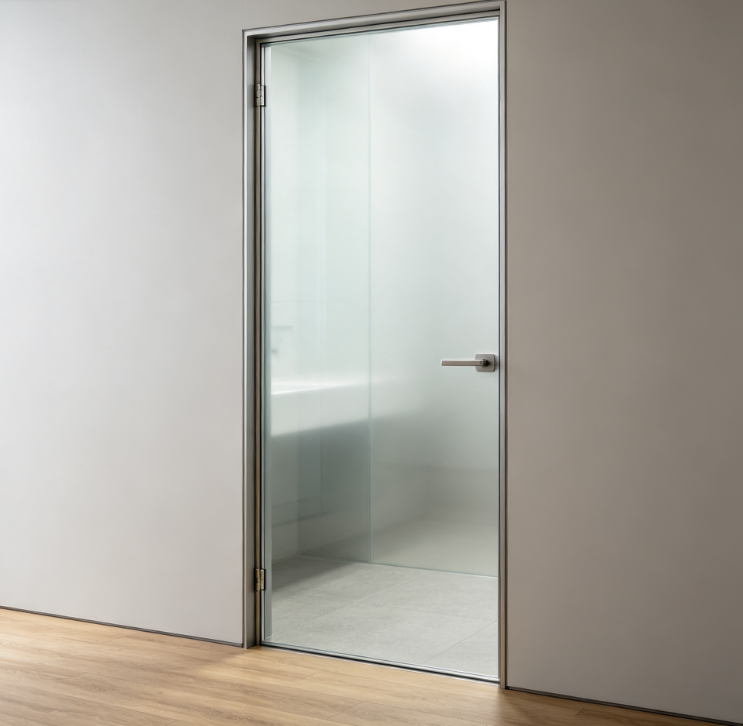
Glass doors can introduce natural light and visual connection between spaces. Depending on the glass and design, they can provide different levels of privacy.
The best door type depends on the room layout, available space and how the door will be used.
3. Select a Material That Fits the Project
Material affects appearance, durability, maintenance and the overall character of an interior door.
Wood and wood-based materials can create a warm and familiar appearance and work with a wide range of interior styles. MDF and other engineered materials can offer flexibility in finishes and designs. Glass can create a lighter and more open appearance, particularly in modern interiors.
When selecting a material, consider more than appearance. Think about moisture, frequency of use, maintenance requirements and the environment where the door will be installed.
For example, the material requirements for a bathroom may differ from those of a bedroom, while a hotel or commercial project may require greater attention to durability and repeated use.
4. Match the Door Style With the Interior
Interior doors should work with the overall design rather than being selected in isolation.
Modern interiors may benefit from clean lines, simple profiles and restrained finishes. Minimalist interiors often work well with doors that have a simple visual appearance and limited decorative details.
Luxury interiors may incorporate richer materials, more detailed finishes or customized elements. Classic or French-style interiors may use decorative profiles, traditional proportions or glass details.
The goal is not necessarily to make every door identical to every other element in the room. Instead, the door should have a deliberate relationship with the flooring, furniture, walls, lighting and other interior elements.
For this reason, it is useful to consider doors alongside the wider material and furniture selection process.
5. Think About Privacy and Glass
One of the most important decisions is whether to choose a solid door or a glass design.
Solid doors are often suitable for spaces where privacy is a priority, such as bedrooms, bathrooms and private offices.
Glass doors can work well in areas where visual openness and natural light are desirable. They can also help create a stronger connection between rooms.
Clear glass provides maximum visibility, while frosted or other privacy-oriented glass options can reduce visibility while maintaining some of the benefits of glazing.
Partially glazed doors can provide another option by combining solid surfaces with glass elements.
The decision should depend on how much privacy the room needs, how much natural light is available and whether visual connection between spaces is desirable.
6. Consider Door Size and Available Space
A door that looks suitable in a showroom may not necessarily be suitable for your specific room.
Before selecting a door, consider the width and height of the opening, wall dimensions, ceiling height, available clearance and the position of nearby furniture.
Swing doors require sufficient space for the door leaf to open. Sliding doors require suitable wall or track conditions. Folding doors also need adequate space for their panels to operate correctly.
For larger projects, it is particularly important to confirm dimensions before manufacturing.
This is also one reason why customized interior doors can be useful when standard dimensions do not match the actual project requirements.
7. Think About Durability and Maintenance
An interior door may be opened and closed many times every day, so durability should not be ignored.
For residential projects, the expected level of daily use may be relatively moderate. In hotels, offices, restaurants and other commercial spaces, doors may experience significantly more frequent use.
Consider the environment, expected traffic, cleaning requirements and long-term maintenance when choosing materials and finishes.
A visually attractive door is not necessarily the best choice if its material or finish is unsuitable for the conditions in which it will be used.
8. Decide Whether You Need Standard or Custom Doors
Standard interior doors can work well for conventional openings and straightforward projects. However, not every interior follows standard dimensions or requirements.
Custom doors may be more suitable when you need:
- Non-standard dimensions
- Specific materials
- Special finishes
- Unique design details
- Project-specific specifications
- Coordinated doors across a larger development
Customization can also help integrate doors more closely with other interior elements.
For a villa, apartment development, hotel or commercial project, custom doors may be developed according to drawings, dimensions and project requirements rather than forcing the space to fit a standard product.
Which Interior Door Is Right for Different Spaces?
Bedroom Doors
Bedroom doors generally need to balance privacy, comfort and appearance.
Solid swing doors are a common option, while the final choice should also consider the interior style, available space and desired level of sound control.
Bathroom Doors
Bathroom doors require greater attention to privacy and the conditions of the space.
Moisture, cleaning and ventilation should be considered when selecting the door material and finish. Privacy-oriented glass or solid doors may be appropriate depending on the layout.

Kitchen and Dining Areas
For kitchens and dining areas, consider movement, accessibility and the relationship between spaces.
A sliding or glass door may be useful where visual connection is important, while a conventional swing door may be more appropriate when stronger separation is required.
Home Office Doors
A home office may benefit from a door that provides privacy and helps separate work from the rest of the home.
The choice can depend on whether the priority is visual separation, noise control, natural light or design.
Hotel and Commercial Interiors
Hotels, offices and other commercial projects require additional consideration of durability, repeated use, project specifications and design consistency.
Doors may also need to coordinate with furniture, flooring, lighting, bathrooms and other elements throughout the property.
Should You Choose Swing Doors or Sliding Doors?
Swing and sliding doors can both be effective, but they solve different spatial problems.
Swing doors are familiar, practical and suitable for many conventional rooms. They work particularly well when there is enough clearance and a traditional opening arrangement is preferred.
Sliding doors can be more useful when floor space is limited or when a room needs a more flexible connection with another area.
Rather than asking which type is better, consider which mechanism works better for your available space and how the room will be used.
What About Glass Interior Doors?
Glass interior doors can change the visual relationship between different spaces.
They can allow natural light to travel between rooms, make smaller areas feel more connected and introduce a contemporary design element.
However, privacy should always be considered. A transparent glass door may be suitable for some living areas or offices but less appropriate for bedrooms or bathrooms.
Different glass treatments and door configurations can provide different balances between openness and privacy.
The right choice depends on the purpose of the room and the atmosphere you want to create.
Should Interior Doors Match the Rest of the Interior?
Interior doors do not necessarily need to match every other element exactly.
However, they should form part of a considered material and design palette.
For example, the door finish can complement the wood tones of furniture or flooring. Hardware can relate to lighting or other metal details. Glass elements can echo glass used elsewhere in the interior.
In a larger project, consistency becomes even more important. Using related door styles and finishes throughout different rooms can create a more cohesive appearance while still allowing certain spaces to have different functional requirements.
What Should You Consider for a Whole Interior Project?
Choosing one interior door is different from specifying doors for an entire project.
For a villa, apartment development, hotel, office or commercial space, you may need to consider the total number of doors, dimensions, specifications, materials, finishes and installation requirements.
Consistency is also important. Different rooms may require different door types, but they should still work within the overall design direction.
For larger projects, the process may include reviewing drawings, confirming dimensions, selecting materials and finishes, producing customized products, coordinating manufacturing, arranging delivery and planning installation.
This project-based approach can help reduce inconsistencies between products supplied at different stages.
Can You Buy Interior Doors From a Showroom?
Visiting a showroom can make it easier to evaluate doors before making a final decision.
Seeing products in person allows you to compare materials, finishes, proportions, glass options and design details. You can also physically open and close different door types to understand how they operate.
A showroom visit can be particularly useful when you are selecting several interior products for the same project.
At George Group’s showroom, clients can explore interior products and compare different categories for residential and commercial projects. This can help when coordinating doors with furniture, lighting, bathroom products, tiles and other materials.

How George Group Helps You Choose the Right Interior Doors
The right interior door depends on the actual project rather than a single universal standard.
George Group can support clients based on their specific requirements, whether they need a single door, doors for several rooms or interior doors for a larger residential or commercial project.
Product selection can take into account the space, design style, function, dimensions, materials and project specifications.
For projects requiring non-standard dimensions or specific finishes, custom interior doors can be developed according to the project’s requirements.
Clients who are working on a larger project can also coordinate interior doors with other products, including windows, furniture, lighting, tiles, marble and stone, kitchen cabinets and bathroom solutions.
Where required, project support can extend beyond product selection to custom manufacturing, quality control, logistics and delivery, installation and after-sales service.
This means the scope can be adjusted to the project. Some clients may only need interior doors, while others may need doors as part of a broader interior project.
Frequently Asked Questions
What is the best type of interior door?
There is no single best interior door for every space. The right choice depends on the room function, available space, privacy requirements, design style, material and project conditions.
How do I choose an interior door for a bedroom?
Consider privacy, daily use, appearance, available space and the relationship between the door and the rest of the bedroom interior. Solid doors are often suitable where privacy is important.
Are sliding doors better than swing doors?
Neither is universally better. Swing doors are suitable for many conventional rooms, while sliding doors can be useful when floor space is limited or a more open connection is preferred.
Are glass doors suitable for interior spaces?
Yes. Glass doors can be suitable for living areas, offices and other spaces where natural light and visual connection are desirable. The required level of privacy should be considered when selecting the glass.
What material is best for interior doors?
The appropriate material depends on the room, project conditions, design requirements, maintenance expectations and budget considerations. Different materials can offer different combinations of appearance, durability and customization.
Can interior doors be customized?
Yes. Custom interior doors can be developed for non-standard dimensions, specific materials, finishes or project requirements.
Conclusion
Choosing interior doors requires more than selecting a style that looks attractive. The right choice should consider the room’s function, available space, door type, material, privacy, durability and relationship with the overall interior. For larger projects, dimensions, consistency, customization, manufacturing and installation also need to be considered. Whether you need one door, several doors or a complete door solution for a residential or commercial project, the best approach is to select products according to the actual requirements of the space.