Choosing building materials for an interior project is about much more than finding products that look good. Whether you are renovating a villa, furnishing an apartment, developing an office or planning a hotel, the materials you select affect the appearance, functionality, durability and long-term maintenance of the entire space.
A typical interior project may require flooring, doors and windows, kitchen cabinets, bathroom products, lighting, furniture, tiles, marble and stone. Selecting each product separately can make it difficult to maintain a consistent design and can create additional coordination between different suppliers.
The right approach is to consider the project as a whole. Before purchasing building materials, think about the type of space, how it will be used, the interior design style, budget, durability requirements and whether customization is necessary.
This guide explains the key factors to consider when choosing building materials for residential and commercial interior projects.
1. Start With Your Project Type and Space
The first step is understanding what you are designing.
A villa and a hotel may both require attractive interiors, but their material requirements can be very different.
Residential Projects
For villas, apartments and houses, homeowners often place greater emphasis on:
- Comfort
- Personal style
- Aesthetic appeal
- Storage
- Customization
- Long-term living experience
For example, a villa may require customized furniture, kitchen cabinets and wardrobes to make better use of its larger or more complex spaces.
An apartment may place greater emphasis on space efficiency, integrated storage and multifunctional furniture.
Commercial Projects
Commercial spaces such as offices, hotels, restaurants, schools and hospitals often require greater attention to:
- Durability
- Traffic levels
- Maintenance
- Functionality
- Safety
- Consistent design
A material that works perfectly in a private bedroom may not be suitable for a busy hotel lobby or school corridor.
Understanding the project type first helps narrow down the right residential or commercial building materials before you start comparing individual products.

2. Consider Durability and Maintenance
Appearance is important, but it should not be the only consideration when choosing interior materials.
How Much Traffic Will the Space Receive?
Different areas experience different levels of use.
A residential bedroom may have relatively low traffic, while a hotel lobby, restaurant or office entrance may be used continuously throughout the day.
Flooring, doors, furniture and other surfaces should therefore be selected according to expected usage.
For commercial projects, durability can become particularly important because frequent replacement or repair can increase long-term operating costs.
Think About Long-Term Maintenance
Before selecting a material, consider:
- How easy is it to clean?
- Is it resistant to moisture?
- How easily does the surface show scratches?
- How often will maintenance be required?
- Can damaged sections be repaired or replaced?
The cheapest material is not necessarily the most economical choice if it requires frequent replacement or maintenance.
3. Choose Materials Based on Function
Every room has different requirements, so there is no single “best building material” for every part of a project.
Living Areas and Bedrooms
Living rooms and bedrooms usually require a combination of:
The goal is to create a comfortable environment while maintaining a consistent interior style.
Kitchens
Kitchens require materials that combine appearance with everyday functionality.
Important elements include:
Custom kitchen cabinets can be especially useful when room dimensions or storage requirements differ from standard layouts.
Bathrooms
Bathrooms require materials that can handle moisture and frequent use.
Common considerations include:
The materials should work together visually while also meeting the practical requirements of the space.
Commercial Areas
Offices, hotels, restaurants, schools and other commercial spaces may require a different combination of:
- Durable flooring
- Commercial furniture
- Decorative lighting
- Doors and windows
- Stone
- Wall and surface materials
The function of each space should therefore guide the material selection process.
4. Match Materials With Your Interior Design Style
Building materials should support the overall interior design instead of being selected independently.
Modern Interiors
A modern interior may combine:
- Neutral colors
- Clean lines
- Glass
- Metal
- Large-format tiles
- Contemporary furniture
Luxury Interiors
Luxury interior design often uses materials such as:
- Natural marble
- Stone
- Premium wood
- Decorative lighting
- Customized furniture
However, luxury does not simply mean using expensive materials everywhere. The combination of materials, proportions, lighting and craftsmanship is often more important.
Warm and Natural Interiors
For a warmer style, homeowners can combine:
- Natural wood
- Wooden flooring
- Stone
- Warm lighting
- Neutral colors
- Soft furniture
This is why interior design materials should be selected as part of an overall design concept.
5. Think About How Different Materials Work Together
One of the most overlooked parts of an interior project is material coordination.
A flooring product may look excellent on its own but create a completely different impression when combined with certain furniture, lighting or wall materials.
Wood and Marble
Wood introduces warmth, while marble adds texture and a more refined appearance.
This combination can work particularly well in:
- Villas
- Luxury apartments
- Hotel interiors
- Living rooms
- Kitchens
Wood, Metal and Glass
This combination can create a contemporary appearance suitable for both residential and commercial interiors.
For example, wooden flooring can be combined with metal details, glass doors and modern furniture.
Stone and Warm Lighting
Natural stone becomes particularly effective when combined with carefully positioned lighting.
Accent lighting can highlight the texture of marble or stone and create depth within bathrooms, living rooms, reception areas and other feature spaces.
The goal is not to use as many materials as possible, but to create a balanced material palette.

6. Consider Customization and Project-Specific Requirements
Standard products can work well for many spaces, but they are not always the best solution.
This is particularly true for large villas, unusual room layouts and commercial projects with specific requirements.
When Are Custom Products Useful?
Customization may be appropriate when you need:
- Specific dimensions
- Built-in storage
- Special finishes
- Unique colors
- Customized layouts
- Coordinated furniture
- Project-specific designs
For example, a kitchen may have an unusual wall length that makes standard cabinets inefficient. Custom kitchen cabinets can be designed around the available space instead.
The same principle applies to wardrobes, storage units and furniture.
Custom Furniture for Different Spaces
Custom furniture can be developed around the actual dimensions and function of a room.
This can help create a more consistent interior while making better use of available space.
For commercial projects, customization can also help maintain consistent branding and design throughout different areas of a property.

7. Use 3D Design Before Finalizing Materials
Choosing materials from individual samples or product catalogs can make it difficult to imagine the finished interior.
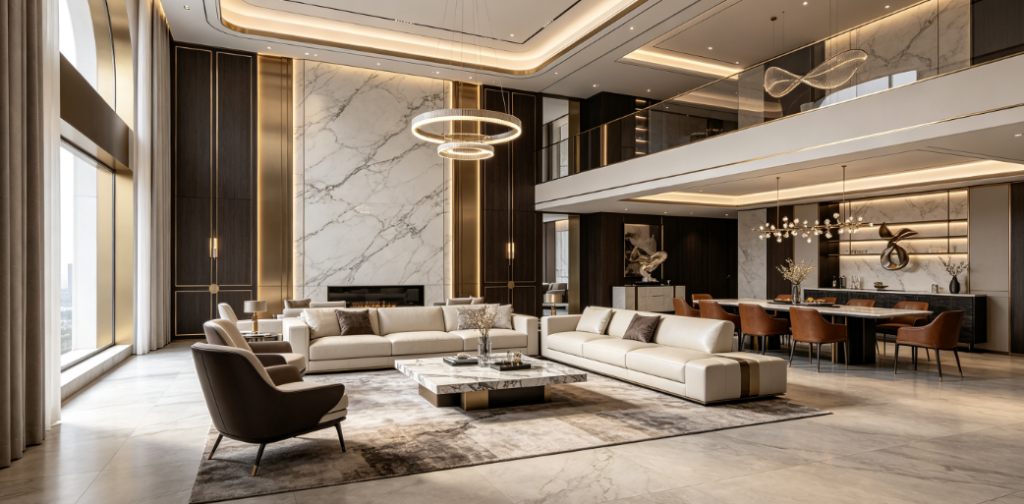
This is where 3D interior design and 3D visualization can be valuable.
Why 3D Visualization Helps
A 3D interior design can show how different elements work together, including:
- Flooring
- Furniture
- Lighting
- Kitchen cabinets
- Bathroom materials
- Stone
- Colors
- Customized products
Instead of looking at each product separately, homeowners can see how the materials work together in the actual design concept.
Avoid Choosing Products That Do Not Work Together
One of the biggest benefits of 3D visualization is coordination.
For example, you may like a particular marble, sofa and lighting fixture individually. But when placed together, their colors, proportions or styles may not create the result you expected.
Using 3D interior visualization before finalizing major product selections can help identify these issues earlier.
8. Balance Quality and Budget
Budget is naturally one of the most important factors when choosing building materials.
However, the lowest purchase price should not automatically determine your decision.
Look Beyond the Initial Cost
Consider:
- Product quality
- Durability
- Maintenance
- Expected lifespan
- Installation
- Replacement costs
A higher-quality flooring material, for example, may have a higher initial price but provide better long-term performance.
Where Should You Invest More?
Prioritize quality for elements that:
- Are used every day
- Are difficult to replace
- Have a major visual impact
- Need to last for many years
For other decorative elements, you may have more flexibility.
A balanced budget is usually more effective than spending heavily on one product while compromising the rest of the interior.
9. Check Product Compatibility and Specifications
Before ordering building materials, make sure different products can work together.
Important factors can include:
- Dimensions
- Material compatibility
- Installation requirements
- Colors
- Finishes
- Moisture resistance
- Weight
- Hardware
- Lighting requirements
For example, kitchen cabinets should be coordinated with the countertop, appliances and lighting.
A bathroom vanity should work with the mirror, storage, stone and lighting.
Similarly, furniture and flooring should be considered together when developing a living space.
This type of coordination becomes increasingly important as the number of product categories in a project increases.

10. Should You Work With Multiple Suppliers or a One-Stop Provider?
A large interior project can involve many suppliers.
You may need one company for flooring, another for furniture, another for lighting and separate suppliers for kitchens, bathrooms, stone and doors.
The products may all be high quality, but coordinating them can become time-consuming.
You may need to communicate separately about:
- Product specifications
- Dimensions
- Finishes
- Pricing
- Production
- Delivery
- Installation
- After-sales support
More suppliers also mean more communication and more responsibility for coordinating different products.
The Advantage of a One-Stop Interior Solution
A one-stop provider can connect different parts of the project through one coordinated process.
For example:
Interior Design
↓
3D Visualization
↓
Product Selection
↓
Customization
↓
Manufacturing / Sourcing
↓
Delivery
Instead of treating furniture, flooring, lighting, kitchens and bathrooms as separate purchases, they can be considered as part of the same interior project.
This approach can be particularly useful when a project requires multiple customized products.
11. See and Compare Materials Before Making a Decision
Online catalogs and images are useful for research, but they cannot always communicate the full appearance of a material.
Seeing products in person allows you to evaluate:
- Texture
- Color
- Surface finish
- Material quality
- Product scale
- Combinations with other materials
This is particularly valuable when selecting natural stone, flooring, furniture, lighting and other products where appearance can vary depending on lighting and surroundings.
For larger projects, visiting a showroom can also make it easier to compare multiple product categories at the same time.
A Practical Checklist for Choosing Building Materials
Before making your final decision, consider these questions:
1. What type of project is it?
Villa, apartment, house, office, hotel, restaurant, school or another commercial space?
2. How will the space be used?
Consider traffic, lifestyle and daily activities.
3. What interior style do you want?
Modern, contemporary, luxury, minimalist or warm and natural?
4. How durable should the materials be?
Consider usage, traffic and expected lifespan.
5. How much maintenance will they require?
Think beyond the initial purchase price.
6. Do the materials work together?
Check colors, textures, dimensions and finishes.
7. Do you need customization?
Consider whether standard products can properly fit your space.
8. Can you visualize the final result?
3D interior visualization can help coordinate products before production.
9. How many suppliers will you need?
Consider the time and effort required to coordinate different companies.
10. Can you see the materials in person?
A showroom visit can help you make more confident decisions.
Explore Building Materials and Interior Solutions at George Group
Choosing materials becomes easier when design, products and customization are considered together.
At George Group, clients can explore a wide range of interior products, including furniture, lighting, flooring, marble and stone, tiles, kitchen cabinets, bathroom products, doors and windows.
The process can also extend beyond product sourcing.
For residential and commercial projects, George Group combines interior design, 3D visualization, customized products and one-stop building material sourcing to help clients coordinate different aspects of their projects.
Whether you are planning a villa, apartment, office, hotel, restaurant, school or another interior project, the goal is to create a coordinated solution rather than simply supply individual products.
Clients can also visit the George Group showroom in Foshan to see materials and products in person, discuss project requirements and explore different combinations before making decisions.
Conclusion
Choosing building materials is not simply about finding attractive products at the right price. The right choices depend on the project type, space function, design style, durability, budget and how different materials work together.
For complex residential and commercial projects, combining interior design, 3D visualization, customization and building material sourcing can make the entire process more coordinated.
Whether you are planning a villa, apartment, office, hotel or another interior project, a well-planned material strategy can help create a more functional and cohesive result.
Planning an interior project? Visit George Group’s showroom in Foshan to explore materials, discuss your requirements and discover customized one-stop interior solutions.